
So, at this point in the saga, the situation was:
Justin LaNasa (LaNasa) had taken out multiple lapsed trademarks, and was claiming his new company TSR LLC was the divine heir to them, and was now having to throw money into a bottomless pit due to having taken Wizards of the Coast to court over it.1 TSR LLC v. Wizards of the Coast LLC, 2:21-cv-01705, (W.D. Wash.)
This was, not sustainable given that is its products were generally bad and it’s convention failed to generate any buzz for obvious reasons. 16 months in, Justin had clearly noticed it wasn’t going great – hence the numerous meltdowns.2 Kim Wincen “Dungeon Crawl, TSR Cons & Meltdowns” (9 January 2026) A gentleman with opinions <blog.wincenworks.com>
So naturally, in May of 2023, he decided TSR LLC should just go bankrupt, and it was very funny. Yes, normally bankruptcies are tragic and heart breaking but this one was very funny. Bankruptcy was filed for on 8 June 2023.3 TSR, LLC, 23-01577, (Bankr. E.D.N.C.)
The first area of hilarity was Stephen Erin Dinehart IV, (Dinehart) of GiantLands infamy, immediately jumped into try to blame Wizards of the Coast for nuTSR putting themselves into bankruptcy.4 Stephen Erin Dinehart IV (8 June 2023) Wonderfilled Facebook <now deleted>

LaNasa himself chose to amplify this message, but decided to make no effort in doing so – leaving it open to speculation if he’d agreed with Dinehart – a man who he’d previous branded a traitor and put on his haters list – should basically resume his old job as nuTSR’s public relations.

TSR original Tim Kask had a much less sympathetic response to it.5 Tim Kask (Kaskoid) (16 June 2023) Facebook <www.facebook.com/tim.kask.9>

Rest in peace Tim, you were rough around the edges but you were an entertaining man of integrity right until the very end.
I. TACTICALLY UNSOUND
Contrary to urban myths, bankruptcy is not an easy out in any society. While it can be a positive decision, it is an invasive and stressful process that should not be entered into lightly.
Or if you’ve set yourself up for it to basically be inviting everyone to come and hit you in the dick with a baseball bat loaded up with rusty nails.
A. Background
You’ll note that in the above summary I specified that TSR LLC had taken Wizards of the Coast to court, not vice versa. Now, Wizards of the Coast had initially take action at the trademark office but LaNasa was the one who escalated it to federal court, asking not for money but a declaratory ruling that his company was the right owner of the trademarks.
At the time of the bankruptcy, both sides had run up hundreds of thousands of dollars of legal bills in the proceedings. TSR LLC has released and claimed to own several products, bragged that it was doing an amazing trade, etc.
B. Important Legal Concepts
Bankruptcy, whether personal or corporate, always involves the appointment of a trustee type figure to provide assurance to those impacted that everything is being done correctly, professionally and free of bias.
Because this is such an major change, generally any civil proceedings involving that party will be put on hold while the trustees take stock of the situation and decide what is in the best interests of the creditors. The trustees can continue litigation, settle on behalf of the bankrupt or even commence new litigation on their behalf.
An important element to understand was this was Chapter 7 Bankruptcy, which is essentially an admission that the enterprise is completely non-viable and the best that can be hoped for is to liquidate the business, and use all the assets to pay for the majority of the process, and where possible provide some payment to creditors.
This is often very routine, businesses fail all the time and frequently it’s not really anyone fault – it’s just the reality of the situation. Countless businesses have fail because of economic shifts or changes in regulations that weren’t conceivable at the time they started.
However, because it is a failed business and business owners do have a due of care to their creditors – it is necessary to establish if there was any wrong doing such as negligence, or the transfer of assets in a deliberate attempt to thwart creditors etc. In these circumstances, the possibilities range from assets being returned (at the expense of the guilty party) or, in flagrant cases, even criminal charges.
Generally if your company enters into Chapter 7, you should expect to never see anything you put in the name of the company ever again unless it is ruled to be of no material value to anyone. Which, if it’s your own creation, feels bad man.
C. For TSR LLC And Justin LaNasa
So the initial set up was:
- Proceedings were moving at the standard snail’s pace for a civil suit of this nature
- Wizards of the Coast could lose their attempt to cancel some trademarks they had not produced new products for in decades
- Wizards of the Coast had already gotten on stay on publication, preventing the release of Star Frontiers: New Genesis and could probably rely on that for any other products that were so despicable they threatened the brand.6 Kim Wincen “Star Frontiers: New Genesis (Unreleased Beta)” (6 October 2024) A gentleman with opinions <blog.wincenworks.com>
- LaNasa and his companies were potentially be on the hook for a hundreds of thousands of dollars in damages, jointly and severally liable (meaning Wizards go after any party for some or all of the money owed).
Now, under bankruptcy – LaNasa no longer had control of TSR LLC, it was handed over to the bankruptcy trustee, who’s only goal was to get money to pay creditors.
Since the trademarks were effectively worthless on the market to anyone but Wizards, TSR had failed to get traction in the market, and the claim to the trademarks was highly dubious, there was no way TSR LLC was going to be able to continue proceedings. That was clear the moment the paperwork hit the desk.
Wizards of the Coast, however, would be free to continue their counter suit against the other companies and Justin once the stay for bankruptcy was lifted. Effectively LaNasa had tied his arm behind his back, while still staying in the ring.
The legal effect of the bankruptcy was:
- Proceedings were put on hold until the bankruptcy was completed.
- Wizards of the Coast would only have to continue their defence if the trustee decided to fund the proceedings or some external party bought out TSR LLC in full
- Justin and his other companies were still on the hook for potentially hundreds of thousands of dollars of damages.
- The bankruptcy trustee was obligated to liquidate anything of value through a fair process that was to benefit the creditors. There are specific rules for this, and they sometimes get exploited by grifters.7 Devin Stone & Liz Dye “The Insane Story of How the Onion Bought InfoWars (and How Alex Jones Is Trying to Steal It Back)” (23 November 2024) Legal Eagle YouTube <www.youtube.com/watch?v=GmDNz7irGgw>
- Even though there was a stay on proceedings, it didn’t stop things like the enforcement of a protective order.
- Wizards of the Coast, and everyone else LaNasa had offended, were fully at liberty to provide information to the trustee that they felt might be useful in the hopes it’d be more consequences for LaNasa.
So, in addition to the lawyer that LaNasa paid to file the bankruptcy on behalf of the company – he also had to pay for more lawyers to protect him from the possible consequences of that decision. Effectively he was incinerating money while making his legal situation worse.

II. PUBLIC HUMILIATION
Corporate Bankruptcy in the US is a procedure which goes through federal courts and thus, is discoverable on PACER and can be freely distributed to the public via platforms like Court Listener. There are also expectations for public hearings, disclosures by creditors, etc. The whole idea is to make things as transparent as possible.
A. The Application
When the initial application became public, it was instant comedy gold for some, and horror for others. Across the 3 calendar years that it operated (2021 – 2023), with all the claims of 800+ people attending TSR Con, and having massive sales, it had made less than $30,000 in gross revenue for the entire period, and less than $1,000 in the first 6 months of 2023.
The estimated financial position was -$384,941.99,8TSR LLC, above n 3, document #1, at page 7 with the only assets being a handful or trademarks that were worthless (the application values them at $0.00), a claim of copyright on the TSR Lizard logo (😆), the TSR Rating Meter (🤣), the domain name (tsrhobbies.com) and the license to use Larry Elmore‘s art on Dungeon Crawl.
While plenty of hobbyists make less than $10,000 gross a year off their sales etc, it is definitely fair to say that most of them make more than -$110,000.00 net annually. That figure, as many pointed out, was hilariously adjusted as Justin had purchased the property personally and was charging, equal rates for rent of the house, and an office in his tattoo shop.
The vast majority of the debt was to LaNasa, and his tattoo business, for promissory notes which had presumably been loans to fund both the operating of the business but also its extensive legal fees, based on the invoices Justin also supplied.
It was also just, kind of funny that it left off numerous elements, which people would later contact the trustee about.
B. The Interview
As mentioned, one important element of corporate bankruptcy is the first interview with the trustee and applicant is accessible to the public. This is to ensure that people who have an interest in it can attend, potentially ask questions and make a decision on what they do or don’t need to do.
Ordinarily these are a very banal affair, the trustee asks a few business questions to scope out the cause of the bankruptcy and get a feel for who was in charge, then moves on. That’s how they like it.
I have a copy of the recording, but I’m not going to share it since the trustee expressly said he didn’t want the recording on the Internet, and I respect that.
LaNasa’s was set to be a circus from the start. In attendance was Justin, the lawyer he hired to filed the application, Donald Semora (Don) of Wizard Tower Games LLC, Tenkar of Tenkar’s Tavern, Tom of Tabletop Taproom, Michael K. Hovermale (Hovermale), a representative from Wizards of the Coast, and ‘s father, William Gentry. The person least prepared and worst behaved was Justin.
The trustee, being an experience lawyer, had a few pointed questions for Justin, questions like (paraphrased):
- “If these trademarks have no value, why were you in court over them?”
- “So when you say these are verbal contracts, you mean you had a conversation with yourself and agreed to it?”
- “So you set out this date in advance, when you first started lending yourself money, and didn’t just write up these promissory notes when you decided you need to go bankrupt?”
- “You’re claiming the license for the artwork was to TSR LLC and yourself, but you realise it just says TSR LLC, right?”
Justin, who had clearly not come prepared, stumbled with the most basic questions but went completely off the rails when Don started asking him questions about his claims Don owed him money, and some of his claims he’d made in TSR LLC v Wizards of the Coast LLC.
Pro-tip: If you are advised by a trustee, who is a seasoned lawyer, that it would be good for you to explain some of the claims you made in a lawsuit, for the benefit of a creditor (ie a person your business owes money) who attended the meeting and (unlike you) came prepared: “I will see you in jail!” is not a good thing to include in your answer to the creditor.
Yeah, it was three rings – all clowns. Understandably after this the trustee decided they didn’t want to host these publicly anymore and made arrangements to only invite relevant parties to future meetings.
C. The Leak
One of the creditors who made a claim was Hovermale, TSR LLC’s former respectable face and social media guy. He was not a man familiar with the process, legal standards, etc. He is also still, as evidenced by his alignment with Clownfish Studios and pride in interviewing Grummz, a man of poor judgement.9 Michael K. Hovermale (Snapshot: 19 January 2026) Linked In <www.linkedin.com> 📸

He made a questionable claim, which I’ll get into later, but for the purposes of this section the important part is his claim hinged on him being an employee of TSR LLC and to prove this he supplied pages and pages of his communications with Justin and others over the years.
This did pretty much nothing to help his claim but provided fascinating insights and confirmations as to the operations – including a conversation between Michael and Justin where they discussed how Ernie did not understand that they planned for TSR LLC to fail as a tactic to derail Wizards of the Coast and continue with OSR Games LLC. Now, I’m not qualified to answer if this was an admission to fraud, but I am qualified to say that is definitely a question that was probably and definitely should have been asked.
It also included Michael sending Justin a poem about how original Dungeon Hobby Shop employee Jeff “Duck” Leeson (Duck) need to shut the fuck up, and how Justin considered members of right-wing and conservative old school gaming communities to be “loyal soldiers” he could use in his planned war with Wizards of the Coast.
Overall it painted very negative pictures of Justin and Michael in equal parts, indicated that there had been bad faith dealings with Ernie, Duck, Don, and everyone else with the whole enterprise looking like it was openly a scam from the start and that Michael had been fully onboard.
Also it included personal details like phone numbers, etc. Michael was able to recall it from the official filings, and put a very redacted version up instead – but the damage was done.
D. The News
The bankruptcy came to the attention of Bloomberg Law, a regular publication which was legal matters reported on by legal professionals. Thus it was very, very funny when they chose to refer to the company “racist game” in their headlines, and sometimes drop Justin’s name in the opening paragraph.10 Ufonobong Umanah “D&D Trademark Suit Stayed After Bankruptcy of Racist-Game Maker” (17 June 2023) Bloomber Law <news.bloomberglaw.com>

This went by editors, and was published by a place that understands defamation and other laws relating to media and remains like this today. When I say be legal professionals, this trend was started by Yale professor Stephen L. Carter in a piece about the implications of the trademark dispute – everyone after that just knew everyone took away it how cartoonishly racist Star Frontiers: New Genesis was.11 Stephen L. Carter “Can Trademark Law Stop a Racist Role-Playing Game?” (16 September 2022) Bloomberg <www.bloomberg.com>
Truly, LaNasa has managed to eclipse the “getting female employees to wrestle in grits for YouTube clout” moment in his aspirations of a political career.12 Bailey Aldridge “Video of women wrestling in grits sparks feud between NC primary election candidates” (25 February 2020) The News & Observer <www.newsobserver.com>
III. DUBIOUS CLAIMS
Because this was a nuTSR issue, there was a weird miasma of questionable claims that surrounded and penetrated it. Some of it was obvious lies, some of it seemed to be obvious lies where the speaker was high on their own supply – and some of it was just highly questionable.
For simplicity, I’ve narrowed it down to the main points.
A. Verbal contracts
When you read the bit where the trustee asked LaNasa questions if he talked to himself to make a deal with himself, you were probably rightfully amused – it is very funny to hear at a bankruptcy hearing and the trustee himself sounded amused to me.
There is, however, nothing inherently wrong or illegal about using verbal contracts with yourself, as the head of multiple entities. While it is not ideal from a record keeping standpoint, legitimate business people do it all the time with much bigger amounts of money.
The issue arises in a bankruptcy where you have potential harm to creditors due to these agreements, and these agreements due to reflect responsible decision making as the controller of that entity.
You can’t load up one company with debt and legal problems, then choose to transfer all the assets to another company to avoid liability. You also can’t just sort of decide to move stuff around and then invent the contract later. That’s not really an issue of verbal or written contract, that’s basic corporate law. The issue of the verbal contract comes in where the specifics become an issue.
In LaNasa’s case, the funniest instance has it’s own entry later. The bigger ones that would have needed him to get the lawyers involved were little things like:
- Why would a tattoo shop agree to a massive interest-free, high-risk loan to an unrelated business?
- Why would the owner of the company, who wanted to maintain level distinction, agree to massive interest-free, high-risk loans?
- Why would the company pay the same rent for the owner using his office in North Carolina, as it does for the entire house? How does the company benefit from that?
Again, it’s not impossible to have good answers to these questions – but it was very clear that Justin wasn’t going to find them without a lot of expensive help.
B. Intellectual Properties
As you’re aware, at this point multiple products had been created which proclaimed too be property of TSR LLC. Goblinz: Those Pesky Goblinz: A role-playing game by Justin LaNasa (Those Pesky Goblinz), Tales and Tots (the trademark was listed, but the game was not), The Cult of Abaddon, and Dungeon Crawl. None of these appeared on the list of assets – even though trademarks did and they bore those trademarks.
At the interview, LaNasa tried to explain this as it was a “publisher” trademark, as though it were customary for publishers to include a clause that they were the owner of the publication inside the book but retain now ownership of anything.
1. Those Pesky Goblinz
Almost immediately, Amazon was updated with a new version of this – not a takedown of the old version and a new listing – just the previous listing updated with some weird changes and declaration that it now belonged to OSR Games LLC.
Were Those Pesky Goblinz a product that had value, and thus an asset, this would be a classic case of unlawful transference of assets. Since I only know of a maximum of 2 people who bought the updated edition, and I am 1 of them, I have my doubts it was considered a substantial enough issue to pursue.
Still, it almost certainly put suspicions on every other claim, which is the opposite of what you want.
2. Dungeon Crawl
Again, I don’t have a copy of Dungeon Crawl because I wasn’t going to pay triple digit dollarydoos to get it shipped to New Zealand, but I am reliably informed that it was marked a TSR LLC product owned by TSR LLC or “TSR Hobbies” which was the doing-business-as name for TSR LLC.
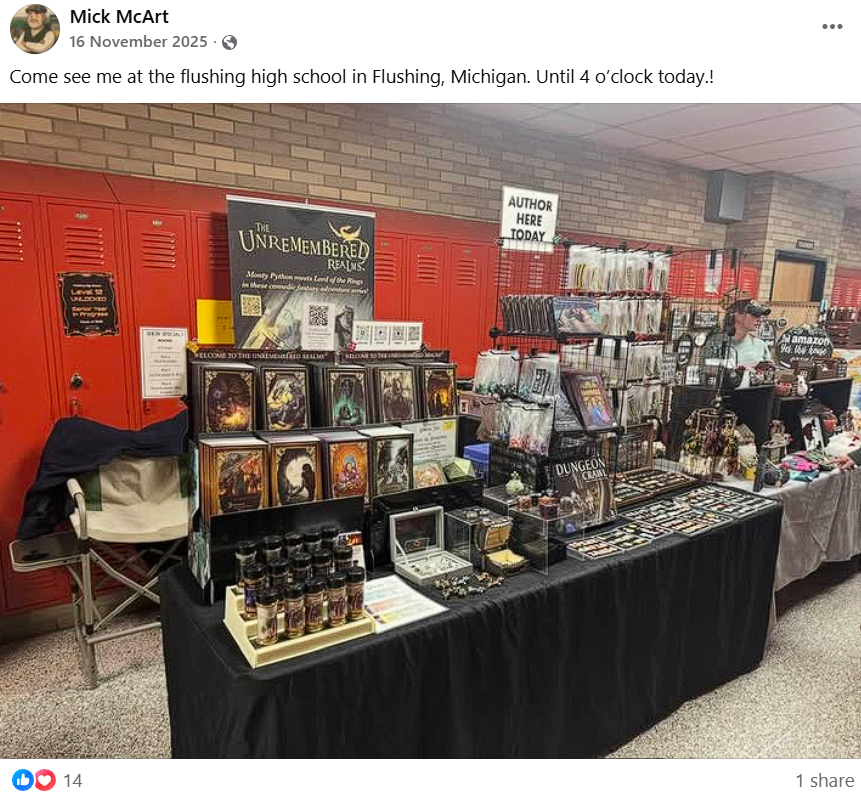
Sales of it continued on via Mick McArt, and we know this because we could see the copies of it on display at various markets. There even seemed to be some confirmed sales after the bankruptcy.
Much like Those Pesky Goblinz, it seems that ultimately the final conclusion is the product was fundamentally worthless – even with the artwork. This is further confirmed by the fact that as of November 2025, Mick McArt has apparently still not disposed of all the copies of it.13 Mick McArt (16 November 2025) Facebook <www.facebook.com> 📸

3. Usurper by Larry Elmore
As mentioned above, there was a weird attempt to claim that the license to use the Usurper artwork specifically for Dungeon Crawl, applied both to TSR LLC and LaNasa – despite the license clearly not mentioning LaNasa.
Again, like verbal contracts – this isn’t impossible per se, intellectual properties are relicensed all the time. The core issue here is that this was a very narrow license, and there was:
- Nothing in the license that indicated that TSR LLC had the right to re-license or transfer the license; and
- No business reason for TSR LLC to share the right to cover art of a specific product that wasn’t worth anything, with anyone; and
- Why would Larry Elmore agree to this without a written record?
All the specifics of this got worked out in private, but I can only imagine it was some amazing conversations behind closed doors.
C. The Inventory of the Dungeon Hobby Shop Museum
So, the intellectual properties were shady but… what about the entire contents of the Dungeon Hobby Shop Museum? According to the web site, prior to the filing of the bankruptcy – everything in there, including the physical copies of Dungeon Crawl, Those Pesky Goblinz, etc and the various artifacts? As recently as March 2023 the web site proudly declared they all belonged to TSR LLC.14 TSR Museum “Online Store” (Archived: 23 March 2023) Internet Archive <tsrmuseum.com>
Mysteriously, at an unspecified time after that, but before the filing the of the bankruptcy the web site started claiming that it was all owned by Dungeon Hobby Shop LLC. Another company owned and controlled entirely by Justin LaNasa (and also being sued by Wizards of the Coast LLC).15 TSR Museum “Online Store” (Archived: 4 June 2023) Internet Archive <web.archive.org>
In these kind of circumstances, trustees overseeing the bankruptcy theoretically have the power to reverse transactions. This process is, however, incredibly expensive as it involves getting approval from the courts and then going through another process to make sure they’re disposed of responsibly.
As has been established, most of the stuff in there was crap. What wasn’t crap, was extremely niche items which were culturally invaluable but fiscally low value due to a lack of millionaires wanting obscure items relating to the history of Dungeons & Dragons. These can be no stronger confirmation of that than the eventual outcome of nobody bothering to force this to be undone.
D. Hovermale Claim
As previously mentioned, Hovermale dumped a ton of information into the filings as part of his claim that he was owed money for the work he did. Now, he didn’t have a contract of employment, but that’s not really the problem. People lodge claims over unpaid work without contracts all the time, and it’s fine – courts and the law don’t want to incentivise exploitation so there’s ways around it.
What made this claim utterly unhinged was the amount of money he claimed he was owed for his work. $58,800… for 7 months of work (June 2021 – January 2022), in a job with no specialist credentials required and that made no demonstrable increase in earnings. Hovermale doesn’t include this job on his LinkedIn, but he thought it was worth upwards of $100,000 per year.
His application also included no evidence that he actually contributed any value – it was mostly a lot of text messages to prove he was in conversations but nothing indicating he created a product, or an effective marketing strategy, etc. It certainly did say how many hours he worked, or why he should get more than minimum wage (as is the default in these scenarios)
Certainly Hovermale was probably owed something, if only because legally you cannot “volunteer” for a for-profit company. But the amount was so absurd, and also so undisputed by Justin, that it led to some conspiracy theories that Hovermale’s involvement kind of weird attempt to act as an agent of LaNasa’s in the bankruptcy. Ultimately though, it went nowhere and despite Hovermale’s other poor choices in life, I’ve never seen any evidence he went into it with LaNasa’s interests at heart.
Which is sad because he’s supplying all the smoking guns in his application would be so, so much funnier if that was the case.
E. It’s fine…

All throughout this we had the hilarity of anonymous accounts appearing to announce everything was fine actually, nothing was wrong and it was all going to work out.
“It’s just a restructuring of the business…” was the initial claim, which was hilarious given that it was clearly Chapter 7 (liquidation) and not Chapter 11 (restructuring) bankruptcy.
“TSR is only bankrupt in North Carolina, not in Wisconsin…” this one was hilarious since its pretty well known that in nations big enough to have multiple states (like The United States of America) bankruptcy operates at a federal level.
“OSR Games LLC and Dungeon Hobby Shop LLC have always been the real owners…” was a funnier claim, since it essentially argued that the “TSR is back!” claim had been fraud from the beginning, and not only had customers been defrauded but also Ernie Gygax… the pivotal figure required to attain even a quantum of legitimacy.
There was, of course, a known element of simply trying to generate doubt via misinformation here – but given it was executed so poorly it mostly came across as simple desperation.
IV. COMEDIC OUTCOME
So, as you may have guessed, it ended up badly for Justin and played out like a farce comedy show.
A. Justin Lawyers Up… Again
Now, when a company seeks bankruptcy it is required to get a lawyer to file the application for a host of legal reasons. Lawyers who take this job generally offer a variety of plans for their services, but it seems that in this case Justin went with the package that was intended for no-incident bankruptcy.
Pay the lawyer up front, get them to prepare and submit the paperwork, and show up to help clarify things at your interview. This payment is declared as part of the process and importantly, the lawyer represents the company.
To the surprise of nobody, shortly after the shit show that was his public interview, Justin had to go hire more lawyers to help him navigate through the bankruptcy without losing even more money and/or getting criminal charges.
These lawyers represented Justin directly, so we don’t know how much they ended up getting paid or what specific work they had to do – but given he hired 3 of them and the stakes involved, I have to assume that it added up.16 TSR LLC, above n3, Documents #30 – 32
Also, these brought Justin’s total total to 7 lawyers across 3 lawsuits:
TSR LLC v Wizards of the Coast LLC (Trademarks)
- 1 original New Carolina lawyer
- 1 lawyer in Washington
Justin LaNasa et al v Tenkar (Defamation)
- 1 New York lawyer for the main suit and the appeal
TSR LLC (Bankruptcy)
- 1 original lawyer to file the bankruptcy
- 3 lawyers on board for helping Justin get through the bankruptcy
Truly the only victors in this were the legal community members who were racking up billable hours over utter nonsense.
B. Wizards Of The Coast Make A Claim And An Offer
At the eleventh hour, right before the window to lodge a claim closed – Wizards of the Coast filed their claim which essentially gave them the only seat that mattered at the creditor table.
$966,018.16 for legal fees and damages that they expected to extract from the TSR LLC v Wizards of the Coast LLC countersuit. That amounted to 71% of the total claims and rendered any potential assistance by Michael K. Hovermale pretty much useless.
Wizards of the Coast followed up with an offer to purchase the disputed trademarks for $15,000.00. This was, it seems, the singular offer for an asset that was of interest to the trustee, and they accepted it.
I should not here, that this number was probably strategically picked as it was a substantial enough enough amount that it would both likely cover the trustees billings to date (including the appointing of a special counsel) and also eliminate any concerns over insufficient compensation.
So the deal went through, and with the money in the trustee was able to obtain from accounts, refunds, etc. it came to: $15,216.50.
C. Guess Who Gets Paid
First and foremost, the trustee and the special counsel collected their payments for services, expenses etc and that added up to $9,417.17 in administrative expenses.
That left $5,745.33 to be disbursed to potential creditors.17 TSR LLC, above n 3, Document #64
1. Wizards of the Coast LLC
Wizards of the Coast, being the largest creditor, received the largest payout of $4,107.03 (71% of the pay out). Effectively meaning they had paid $10,892.97 to completely neutralize the TSR LLC v Wizards of the Coast LLC lawsuit – after all TSR LLC didn’t own the trademarks any more, so they couldn’t push for a declaratory judgment.
Now, there are multiple ways to look at it and certainly the most cynical way is that it means that this entire fiasco probably cost Wizards of the Coast $1 million dollars. This was, about a day’s revenue for them at the time.
Another way to look at this, is they saved potentially another million dollars by neutralizing what was likely going to be a long, drawn out lawsuit with no pay out.
The funniest way to look at this is, assuming the leaked Discord chats were true, this bankruptcy forced TSR LLC to follow through of the original plan to sell them for various prices in the millions. If we assume the original price was the modest end of the spectrum, $10,000,000 then they were sold at a 99.9635% discount with.
And just to be clear, this does not confirm Dinehart’s hilarious delusion that the court confirmed Wizards of the Coast didn’t own TSR, that was never in dispute. The only weird dispute was if they owned a particular collection of trademarks registered by LaNasa. No ownership on those ever needed to be proved, since Wizards of the Coast got to buy them – thus neutralizing the trademark trolling.
2. Justin LaNasa
Due to listing himself and his tattoo company as creditors, allowed him to get two bites of the cherry and take home princely $1,357.13.
Now, when you consider that Justin had to pay $7,000 to initiate the bankruptcy, that means paid at least $5,642.87 for the privilege of facilitating Wizards of the Coast’s near 100% discount on the purchase of the pivotal trademarks.
That’s without factoring in the roughly $346,000 in confirmed expenses of running the business, paying for lawsuits, etc.
It’s not exactly the outcome you want when you’re the kind of guy who makes these claims as to his credentials as political candidate.

3. Don & Hovermale
For his application, Hovermale received 1 cent shy of $250.00 which is well short of minimum wage for the work that he had done, and about 0.04% of the interesting figure that he claimed.
Unfortunately for him, this kind of puts an end to any hope he had for seeking compensation since he has, on the record, claimed that the whole balance was owed to him by TSR LLC and that company is now deader than disco.
Don, through his company Wizard Tower Games LLC, received $31.18 on his modest $7,335.00 claim – which realistically didn’t cover much but the finalization of the bankruptcy would have allowed him to write off the remainder as a bad debt and claim it on tax.
4. Not paid – All the collaborators
Dinehart, Duck, Ernie, Michael Yach, basically everyone who helped out and arguably should have made a claim since you can’t volunteer to help a for-profit enterprise – they got nothing.
Later, when everything was settled – Ernie got a split of the sales of the remaining artifacts from the museum – I think, and probably got paid for the sessions he ran as a DM (as a contractor).
LaNasa’s lawyer in Washington was also listed as a prospective creditor but didn’t file an application – one can only conclude she didn’t want to wait and just sought payment directly from LaNasa himself.
V. CONCLUSION
I can’t say that LaNasa doomed his endeavour with this move, but I can definitely say he accelerated its failure in the funniest way possible.18Aruni Soni “D&D Owner, Maker of Racist Gamer Seek to Dismiss Trademark Case” (30 March 2024) <news.bloomberglaw.com>

By making TSR LLC bankrupt, he had essentially put Wizards of the Coast in a no lose position from which they could continue to seek damages from him and nullified any credibility his claims to being a divine successor to Dungeons & Dragons by virtue of both eliminating “TSR” and the complete absence of Ernie Gygax from the paperwork.
Of course, this was never a real TSR but I feel the need to point out that if Dinehart was correct and they’d killed TSR again – this would represent an amazing speedrun of disaster.
If we understand that Lorraine Williams did sell TSR Inc to Wizards of the Coast LLC because it was effectively bankrupt this would mean the records went:
Gary Gygax & the Blume brothers: 12 years (1973 – 1985)
Lorraine Williams: 12 years (1985 – 1997)
LaNasa: 2.5 years
LaNasa would have shave 9.5 years of the established regular time for losing TSR, bypassing 80% of the time with his one weird trick of… complete incompetence.
(Out of respect for the memory of Don Kaye, I’m not going to make a joke about the original Tactical Studies Rules.)
Sadly, while it essentially heralded the end of the lawsuit against Wizards of the Coast, it did not end the lawsuit against Tenkar, stop him releasing 1 more terrible product, or stop him trying legal action against me.
That’s right, the next part of the story is about me.
- 1
- 2Kim Wincen “Dungeon Crawl, TSR Cons & Meltdowns” (9 January 2026) A gentleman with opinions <blog.wincenworks.com>
- 3
- 4Stephen Erin Dinehart IV (8 June 2023) Wonderfilled Facebook <now deleted>
- 5Tim Kask (Kaskoid) (16 June 2023) Facebook <www.facebook.com/tim.kask.9>
- 6Kim Wincen “Star Frontiers: New Genesis (Unreleased Beta)” (6 October 2024) A gentleman with opinions <blog.wincenworks.com>
- 7Devin Stone & Liz Dye “The Insane Story of How the Onion Bought InfoWars (and How Alex Jones Is Trying to Steal It Back)” (23 November 2024) Legal Eagle YouTube <www.youtube.com/watch?v=GmDNz7irGgw>
- 8TSR LLC, above n 3, document #1, at page 7
- 9Michael K. Hovermale (Snapshot: 19 January 2026) Linked In <www.linkedin.com> 📸
- 10Ufonobong Umanah “D&D Trademark Suit Stayed After Bankruptcy of Racist-Game Maker” (17 June 2023) Bloomber Law <news.bloomberglaw.com>
- 11Stephen L. Carter “Can Trademark Law Stop a Racist Role-Playing Game?” (16 September 2022) Bloomberg <www.bloomberg.com>
- 12Bailey Aldridge “Video of women wrestling in grits sparks feud between NC primary election candidates” (25 February 2020) The News & Observer <www.newsobserver.com>
- 13Mick McArt (16 November 2025) Facebook <www.facebook.com> 📸
- 14TSR Museum “Online Store” (Archived: 23 March 2023) Internet Archive <tsrmuseum.com>
- 15TSR Museum “Online Store” (Archived: 4 June 2023) Internet Archive <web.archive.org>
- 16TSR LLC, above n3, Documents #30 – 32
- 17TSR LLC, above n 3, Document #64
- 18Aruni Soni “D&D Owner, Maker of Racist Gamer Seek to Dismiss Trademark Case” (30 March 2024) <news.bloomberglaw.com>
One thought on “nuTSR declares BANKRUPTCY!”