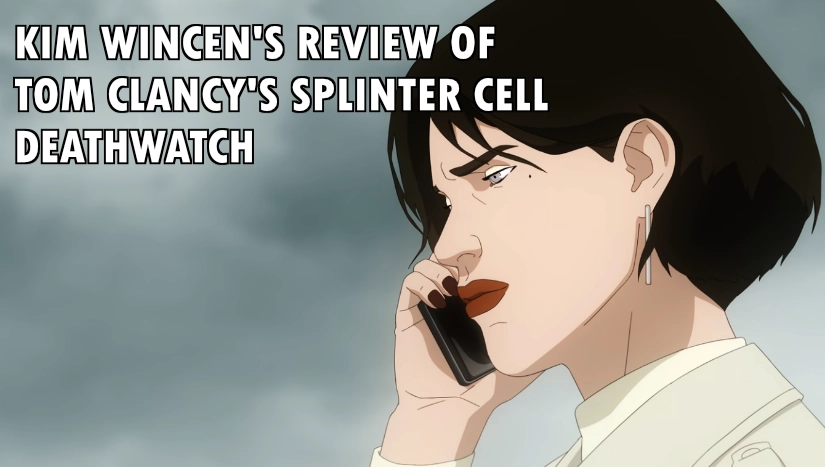
So, the reason I played Tom Clancy’s Splinter Cell: Conviction(Conviction) is because I had watched Tom Clancy’s Splinter Cell: Deathwatch(Deathwatch), the Netflix show led by John Wick writer Derek Kolstad.
Apparently Koldstad was a huge Tom Clancy fan,1Joe Deckelmeier & Grant Hermanns “Netflix’s Splinter Cell: Deathwatch Creator Talks Franchise’s New Era” (14 October 2025) Screenrant <screenrant.com> and enjoyed the games as well – and that makes it very odd how the series diverges from games and from the general approach taken by Clancy. Of course, he was also the executive producer of The Continental: From the World of John Wick mini-series that cast infamous antisemite and all round shitbag Mel Gibson in a major role. So, understanding the audience isn’t his strong suit.
This leads to a weird scenario where it doesn’t quite feel like a Splinter Cell story, or John Wick story, but some sort of third thing that references Splinter Cell while trying to point to the latter. It’s fun, but its also very scattershot in that way which properties designed to try to reinvent a thing by making it more like an unrelated thing often end up being.
I’ve written this to contain minimal spoilers, however it is impossible to talk about elements of characters and narrative without touching on major spoilers – so be warned.
Continue reading I watched: Splinter Cell – Deathwatch (Season One)- 1Joe Deckelmeier & Grant Hermanns “Netflix’s Splinter Cell: Deathwatch Creator Talks Franchise’s New Era” (14 October 2025) Screenrant <screenrant.com> ↩︎
