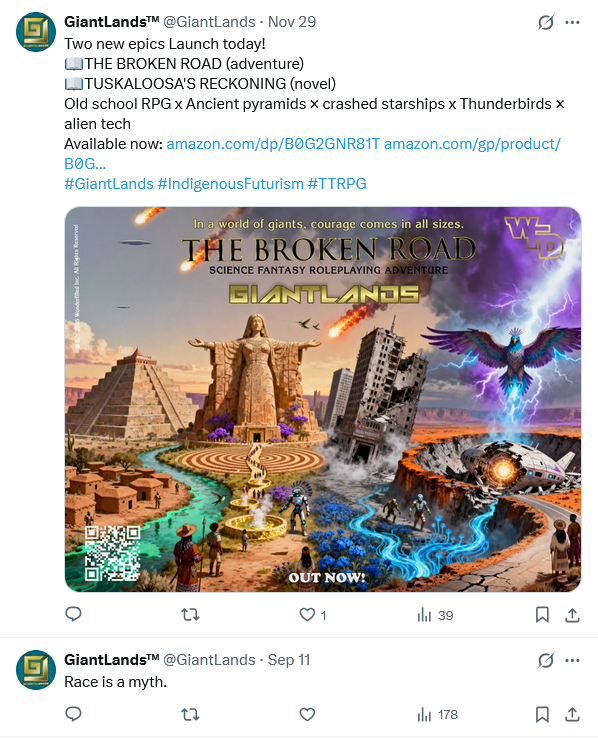
On or about 29 November 2025, the long overdue The Broken Road adventure for GiantLands was announced on X née Twitter,1Stephen Erin Dinehart IV as “GiantLands” (29 November 2025, X née Twitter) <x.com/GiantLands/> making up 50% of the current front facing posts and having the singular like on the posts. Also on Facebook.
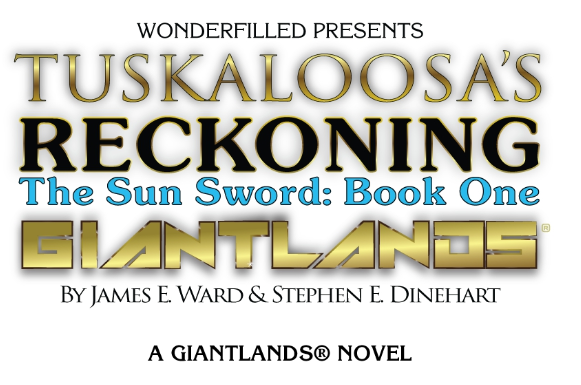
It was accompanied with an announcement of a book, Tuskaloosa’s Reckoning, full title: Tuskaloosa’s Reckoning: The Sun Sword : Book One… or I suppose:2 Stephen Erin Dinehart IV Tuskaloosa’s Reckoning: The Sun Sword (15 November, Wonderfilled Inc, Amazon Print on Demand) (Tuskaloosa’s Reckoning)
Now, predictably after years of Dinehart bragging that his products would never be digitized, and would only be sold via master craftspeople using American products he picks himself etc… it seems they are just being sold via Amazon print-on-demand and the novel is available on Kindle. So, while I wait for The Broken Road to be delivered, I figured I’d read the book.
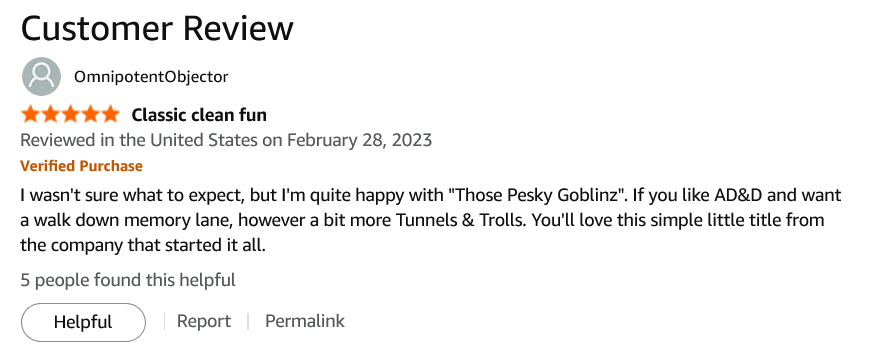
At the time I purchased it, it has 1 review giving it 5 stars.
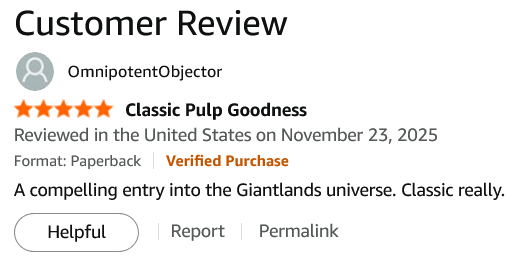
This reviewer gave the same rating but more effort into explaining Those Pesky Goblinz, so I’m not convinced they’re entirely unbiased.
I however, am, at this stage—the foremost GiantLands scholar alive. So, let’s get into what is is, and is it worse than the AI slop nuTSR put out. Spoilers ahead.
1. The “Creators”
At the time of writing, the Amazon summary lists a practical who’s who of creators.
- Stephen Erin Dinehart IV (author)
- James M. Ward (author) credited as James Ward
- Jeff Dee (illustrator)
- Steve Ince (illustrator)
- Larry Elmore (illustrator)
- Gary Gygax Jr (contributor) credited as author “Gary Gygax” in the summary

Virtually none of them are meaningful participants, just to front load this, it looks like it was written primarily via generative AI in a rush with no meaningful editing.
Gary Gygax Jr, better known as Ernie, is listed as the “Creative Supervisor” on the inside, but this seems to be entirely on his position on the GiantLands position—particularly since he died before this product was hinted at.
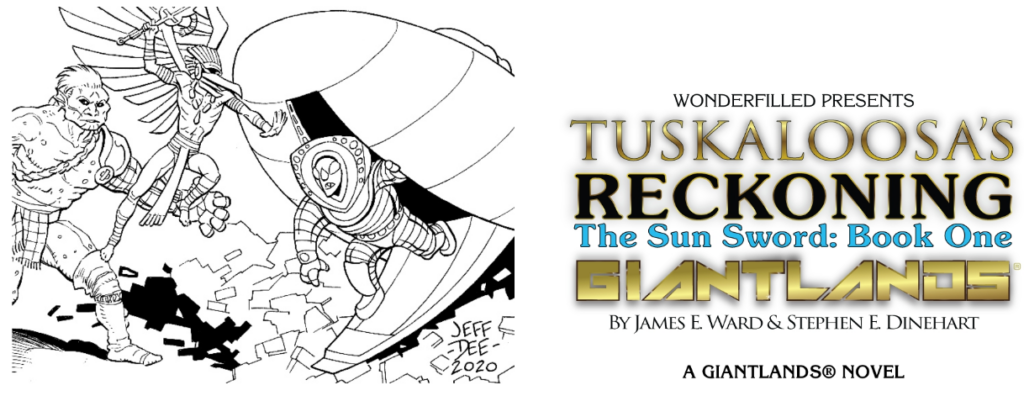
Jeff Dee, Steve Ince and Larry Elmore all did work for hire which is re-used in the book – not the AI slop on the cover though. That the art contributes nothing to the story, and that Jeff Dee’s piece seems to contradict it and is in the front cover suggests to me the illustrations were added only to apply their names.
Josh Diffey also did work for hire, in fact the heavy lifting for the absurd amount of internal illustrations the GiantLands game had, is mentioned only one in the boilerplate credits and not in the promotions at the back.
James M. Ward, who is also dead, never hinted at writing a novel and in fact used to laugh at the idea of doing more work on this… his inclusion seems entirely based on his contributions to the GiantLands game. This is particularly vulgar and exploitative given Jim’s history of contributions to games and fiction.
And just to be clear, in 2021, Dinehart was very clear that everyone else on the project was hired. GiantLands belonged to him and him alone.3 Stephen Erin Dinehart IV (24 August 2021, X née Twitter) (now deleted, no archive available)
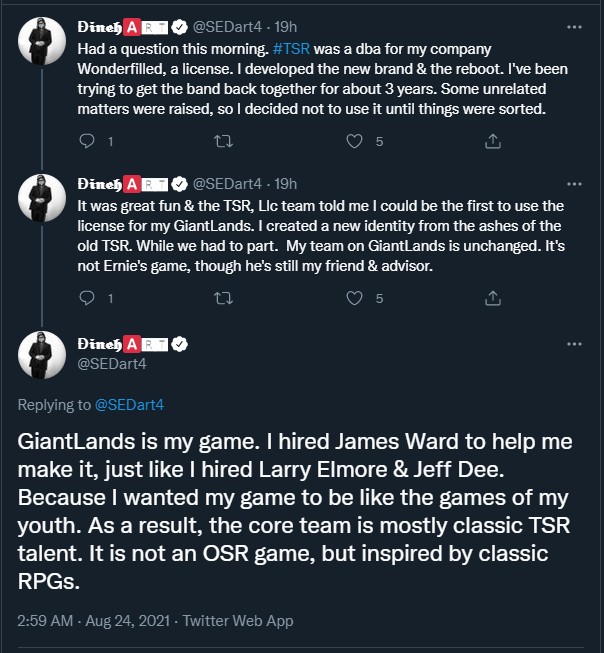
So, really the only human contributor to this project seems to be Stephen Dinehart.
2. The Story
The story is about the most badass leader and warrior, who has his city (that he built himself) invaded by an unstoppable force who then kidnap his super special girlfriend/partner/wife and capture him. He escapes easily, because he’s a badass and the unstoppable invaders are dumbasses, then he goes on a “spirit quest” where he learns to location of a super weapon. On the way he starts building his rebel army and then finds an ancient intelligent weapon that is super noble but also super evil. He then wins a series of boss fights, and a glossed over six month war, to make the unstoppable invaders decide to leave because they were fools to try to invade a world where people have faith connected to the land, then he is a badass is an old man and still holding onto the intelligent weapon because its dangerous.
That’s about all that can be said with certainty, because the side effect of Dinehart’s flakey approach and generative AI’s inability to track of information, so random things change in a way that wouldn’t occur with a write who was genuinely invested in telling a story.
A. Inconsistencies
The timeline is incomprehensible, as when we are introduced to the protagonist (Tuskaloola) he is pondering how the village(Mabila) he spent 20 years building (apparently he started at age 15) and concerned about the threat arriving after “weeks” of hearing about it. Later, early in his revolution, the a big bad says he “[d]estroyed two extraction facilities representing seventeen years of resource investment.” and then biggest bad ends 40 months of occupation, 6 of which are glossed over.
Also information regarding characters and items is often contradictory or confusing, at one point the love interest (Talasi) is kidnapped and there a subplot about how she’s a willing collaborator, and then a chapter about how it was really all a trick, and then multiple conversations about it was just her surviving, etc.
There’s also like a weird thing where Talasi foresees her own death as inevitable in the conflict, but a price gladly paid for peace and the safety of her people. Fortunately for Talasi, they get all of that without her dying or ever being particularly at risk.
The invaders(Harvesters) are also, simutaneously, ontologically evil colonizers who are trying to one-up the villains from Captain Planet and the Planeteers but also decide that they will accept defeat rather than use their weapons of mass destruction that they have explicitly for the purpose of annihilating resistant populations.
They simutaneously have inpenetrable armour, and alien technology that cannot be understood – and are easily defeated by warriors with primitive weapons who then steal and immediately use the weapons of the Harvesters without training.
It’s also particularly confusing since it’s Book One but goes to great lengths to present itself as a completed story, with the bad guys determined never to return and the good guy is shown to be kind of retired at 70 (which is early retirement for his species, I think, GiantLands said they live to like 200).
Also like… this the use of Jeff Dee’s artwork that seems to be there entirely to justify his inclusion in the credits.
Most remarkable of all though is Zel’koth, a big bad who monologues excessively, returns from the dead, and during the story it’s claimed he’s broken forty-seven worlds… but in the final chapters he’s busted down to just seven.
B. Incomprehensible stakes
Perhaps the biggest problem is, however, that every chapter frames these things as a situation of both infinite, and minmal, jeopardy. The population of the initial village is estimated at 3,000, and the sizes of fighting forces are generally 100-300. But the scale of the invassion is supposed to be global and all encompassing.
For context, at the Siege of Leningrad, the Soviets and the Nazis each fielded roughly a million soldiers. That wasn’t for the whole world, that was just for a pivotal city in the USSR.
If we shift the frame to indigineous battles, even the lowest estimates put The Battle of Little Bighorn closer to 2,000 than 1,000. In the Anglo-Zulu War the overall size of the Zulu army was well over 30,000 with their armies in battles being reportedly over 3,000. The “Black War“, which was really more just a systematic genocide by British colonists on the island of Tasmania, had 200 deaths by the winners and resulted in 600+ deaths and forced relocation of thousands of native aboriginals. So the numbers don’t really fit the proposed drama or the history it aims to tap into.
Oh, the names Mabila and Tuskaloosa are taken from a real event in Alabama where a few thouand conquisadors slaughtered up 2,500+ Missipian warriors and countless civilians. The real Mabila was obliterated so brutally and completely that we don’t even know for sure where it was on a map.
Also it’s a very strange war in that we never see it treated as anything other than like a tabletop war game. There are no children who need to be raised during the conflict, no permanently injured soldiers who must be tended, no starvation due to fields going unworked, etc.
It is, overall, a story which requires you to go in with a pre-prepared suspension of disbelief and commitment to ignore everything outside the story to find anything to enjoy within it.
3. The Worldbuilding
The novel falls into a weird category where in order to have a clue what many of the paragraphs and proper nouns mean, you need to be familiar with the GiantLands game lore, but then you’ll notice all the issues and contradictions.
A. Is this GiantLands
Many problems are simple issues that essentially boil down to not bothering to update the AI writing. For example: referring to humans instead of Sapiens. But some areas seem kind of like Dinehart himself forgot or changed the lore, for example: Manquatti are regular appearances in the novel but don’t match the description in the game.
In the game, the Manquatti are a proud alien race who consider themselves above the dwellers of the planet, and have a “hive mindset” and consider individualists to be defectors. In the book, they are “mutants” who live among the tribal people.
Anakim (a type of giant), Andros (robot people), and Ions (electricity people) are simply not present at all, despite being core species in the GiantLands game. The game says Sapiens don’t rule the world, but they clearly do in this story. This brings me to my main point of confusion: Is this canon?
The events of the book, though they seem to resolve themselves entirely within 40 months or, at most, 2 decades, are supposed to be cataclysmic and world altering. Are they supposed to be an important part of GiantLands lore? Should random people you meet in GiantLands know and admire Tuskaloosa? Is looted Harvester technology supposed to be present?
It’s difficult to say it also presents GiantLands as a strange world where natives rely on weapons like war clubs and magic, but are also instantly proficient with energy weapons and communicate over comms like military operators and cartoon savages at the same time:4Tuskaloosa’s Reckoning, above n 2, page 105
Kree-ah’s voice crackled over the radio: “Northern team successful! Upper levels secured! But many metal birds launch from landing pads; they call for help from sky-ships!”
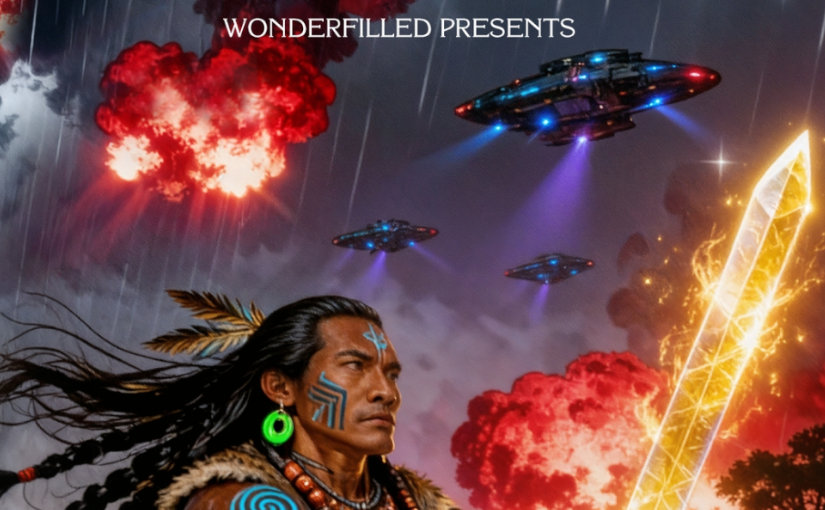
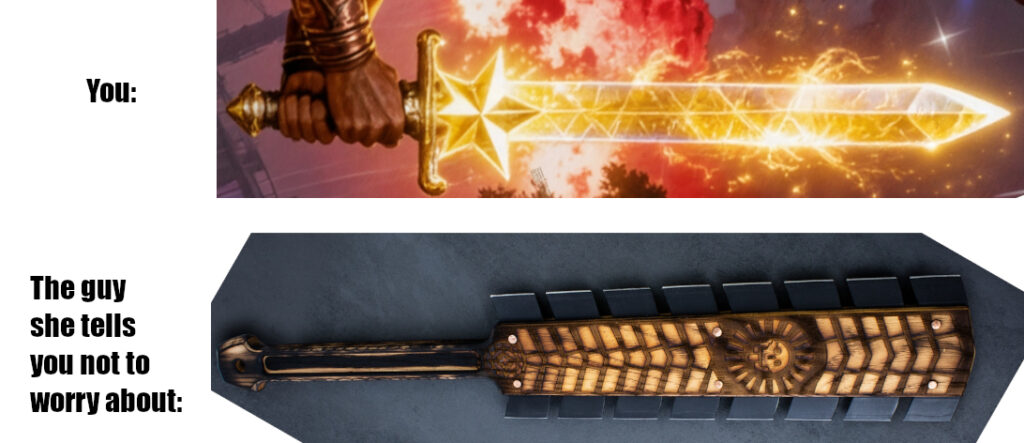
The titular Sun Sword itself is similarly inconsistent, it gets described as a a macauhitl, and also a sword and a war club (a macauhitl is neither of these things). When its first introduced it claims it’s definitely not a giant’s longsword, but much later in the book it is sheathed like one. And well, this is it on the (AI slop) cover art it’s definitely a european sword with a six-pointed star, not the sun:
But there are even more specific problems.
B. Ley Lines
A confusing but at least kind of unique element which was left under developed in GiantLands was the attempt to blend ley lines, an invention of one particular guy from England in the Victorian era, into Dinehart’s magic system he insists is based on or inspired by Native American mythology. To this end there are four varieties of ley energy.
This is mentioned in the novel 6 times, where the “ley substrate” that the invaders are pillaging is mentioned 17 times. None of the mentions elaborate on the the nature of these varieties, what they stand for, etc. The closest we get is attributing the harnessing and understanding of them to Giants.
The end result is that this aspect of the their society which is supposed to be sacred, divine and engaged with as such by the players is depicted as analogous to crude oil, but with magic powers.
It has no reason for being important or sacred to the people other than its ability to channel magic for their use and advantage… and just being, inherently sacred. Like it demonstrably lets them do magic, so they worship it as magic so its not really faith so much as a decision made on observeable data from their end, but everyone pretends like it is faith.
Players don’t need to strip the lore off it, it’s already stripped in the first book.
C. Giants
The game provides 2 types of playable giants, and indicates that other giants exist in the 5th Age with varying status ranging from ogre-like monsters to living gods… despite the game being called GiantLands, this is idea is not explored very much.
The novel includes Nephilim (one of the playable giant types) basically as people, and mentions Rephaim (one of the living god types) as beings of the 1st Age who created the weapon that grants God Mode.
Nothing in it explains the Rephaim’s role in the 5th Age, their relationship to the other species of GiantLands and the goddess Gaea. Wielding the Sun Sword seems interlinked with Tuskaloosa’s becoming a champion of Gaea and yet there is nothing about the relationship of Rephaim, the ones who created the weapon, to Gaea.
This is a fundamentally bizarre decision to make given the setting name is GiantLands and the Giants are referred to throughout the story – but you don’t get any more information on the Giants than I’ve given you above.
The giant character in it exists, primarily just to be a martyr for the cause and to give a speech about dying well. Like the Manquatti, it is just assumed the read will know everything that matters about the Nephilim and thus infer everything from the minimal inclusion.
Anyone who buys this for giants, is going to be disappointed. 0 magic beans.
D. Ages
In the previous material, Ages were unfathomable and unknown periods of time – the 4th Age is analogous to our own time (or perhaps our own time if the “What if History was a lie?” tagline was meant to be canon) and people being unaware of the other ages due to cataclysmic events. The 5th Age comes into existence when the divine spirit of the world, Gaea, decides the world is too clogged up with pollution and industry, so tries switching it off and back on again.
So you can imagine how confusing it is when characters in this novel refer to the 1st Age as a thing that everyone knows about like its been taught to them in a standardized education program. They are somehow aware of the 1st Age, and the figures in it, but also have to reinvent ideas like the tribal democracy the Cherokee had before colonizers arrived.
Words and location names also have survived, but no mention is made of the 4th Age or The Great Reset, it seems everyone just gets issued an internal codex at birth to allow them to know all this.
E. No 1UPs, masks, or gifts from Gaea
GiantLands is weird as a tabletop role-playing game. You get multiple lives, everyone is collecting magic coins, everyone gets mutations (because they were in Gamma World) and every player character is a personally chosen by Gaea to help heal the world (literally).
People who start with a hide loincloth can also start with an alien sniper rifle, there is a complex currency system that uses precious stones instead of precious metals, and many beings can tap into the ley energy to do all kinds of magic.
These kinds of unique quirks are pretty much the sort of thing that supplementary novels and other metatexts can really help people process and further appreciate the world building of the game. The appeal of the Forgotten Realms isn’t just that it has over 9,000 dungeons available it’s the depths of the world building.
You can find endless information on the realms: how the deities and faiths interact with each other, how regular people feel about monsters and groups, etc. Ed Greenwood has even done a Discord post saying what drow breast milk tastes like… oh Ed. 5Several_Flower_3232 “I’m actual Ed Greenwood here to talk about drow breastmilk” (23 March 2024, r/DnDcirclejerk, Reddit) <https://www.reddit.com/r/DnDcirclejerk/comments/1bm2aaw/im_actual_ed_greenwood_here_to_talk_about_drow/>
My point being that if you want to introduce a world where people have randomly assigned special abilities, faiths built around a sort of demonstrable magic force tied to their land, and monsters are integrated into the magic too. That sort of thing should influence the way people think of magic & technology, what skills they develop, the idioms they use and even their food.
None of this appears in the novel – the closest we get is some people are “ley sensitive” and somehow everyone is energy weapon certified. If you found the setting of GiantLands confusing because of these elements and wanted to read more about how they fitted in, this book not only fails to help you but simply denies these design decisions were made in the first place.
If the goal of the book was to be analogous to the paperbacks that role-playing game publishers released to get people invested in their worlds, then it fails. If the goal was to craft a compelling world for the story in isolation, then it fails even harder.
This also, essentially, raises questions as to the value or validity of GiantLands as a setting if you need to depart from the established material so much simply to make a story as simple as this.
4. The Craft
The book is badly written, that much should be obvious but not just for the inevitable consequences of relying on AI that josh (with parentheses) explained in “You are a better writer than AI. (Yes, you.)“
If you want to further understand why AI is bad at the craft of writing, I also really recommend “you don’t know the full truth about generative ai ‘writing’ by Lynn D. Jung6 Lynn D. Jung “you don’t know the full truth about generative ai ‘writing'” (27 July 2025, YouTube) <https://www.youtube.com/watch?v=hVo2dQevVBg> and “AI Writing Is Trash, But AI “Writers” Will Never Notice” by In The Thorns.7 In The Thorns “AI Writing Is Trash, But AI “Writers” Will Never Notice” (30 November 2024, YouTube) <https://www.youtube.com/watch?v=TQ8YkstQ4dE>
A. Is there authorial intent? I don’t think so.
It falls apart because for all the claims Dinehart has made about using AI as a tool, it is pretty clear that he is not paying attention to the output of the tool. Rather he is, in the classic tradition of the Ideas Guy, giving the prompt and then turning his back on the idea of doing any more work.
There are hallmarks of this great and small, the way that Talasi has contradictory arcs and personas. She is presented as the contrast to Tuskaloosa’s warrior nature, and quickly converted into a damsel in distress, but also a warrior who immediately joins the fight despite fatigue, malnutrition and presumably no familiarity with the Harvester rifle she has armed herself with.
As mentioned, there is a whole arc where they encounter evidence she has become a collaborator with the invaders but there is then a chapter about how she was actually a mastermind infiltrator whose god foresaw the events and planned for them. This goes nowhere, and is almost immediately reversed.
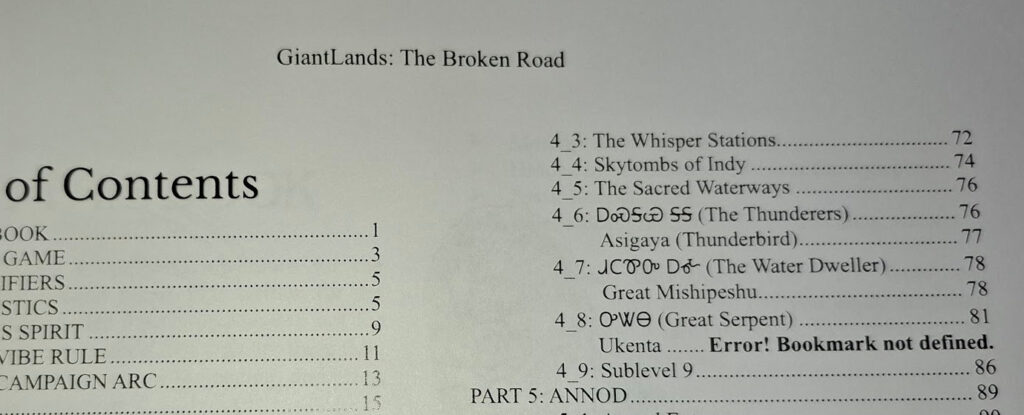
Basic editing would have caught this – as well as that the table of contents doesn’t match the actual contents of the book and there is no apostrophe in the title as it is listed in the header of each page.
This makes the inclusion of James M. Ward’s name all the more vulgar, the absolute most that could attributed to James was vague forms of ideas, of which all uniqueness and personal creativity has been stripped and obliterated.
B. Like an overtuned video game
A consistent absurdity with Dinehart is he has tried to claim that he revolutionized video game writing and design via a junior position on a DLC, and other bits of work he did and did not get. So, a novel he is the lead on should reflect his sensibilities as a narrative creator right?
If so, it seems his stance is that Call of Duty slop is the pinnacle of game design.
Bad guys are often introduced in not just the same chapter, but the same encounter where they are defeated. Battles of pivotal importance are described in high level terms. The temptations of the hero occur only when there is no other jeopardy, and so they can promote .
The writing is, in many ways, like that of a cinematic video game where the levels, set pieces and cutscenes are designed far in advance of the plot or dialog. This evident in how the central conceit changes throughout the story, with the bad guys always having downfall due to a different collective mistake:
- Trying to invade a world that has weapons from the 1st Age; then
- Making the invasion of the world a “personal” matter hero; then
- Walking into a trap set by the gods of GiantLands; then
- Underestimating the dedication and spirit of the people they are invading; then
- Attempting to conquer a people with a deeply held spiritual connection to nature
It’s also just clearly written in independent parts. The meat of the first chapter is a discussion about how the invaders only negotiate to gather information before making their demands, and then the invaders arriving and making their demands. The second chapter contradicts this and the rest of the book by insisting the invaders don’t speak any language that can be understood, and never negotiated.
Casualties of the conflict are glossed over unless they can be worked into a motivational speech or other monolog, the novel equivalent Call of Duty: Advanced Warfare‘s singular memorable moment.8 Matt Mckeown “Where Does The Press F To Pay Respects Meme Come From?” (11 April 2024, The Gamer) <https://www.thegamer.com/press-f-to-pay-respects-call-of-duty-meme-origin/>
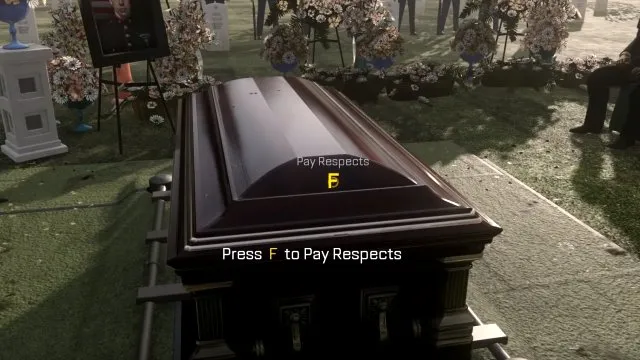
This further compounded by the fact that much of the story makes more sense if you remove Talasi’s personal moments – in her own chapter where she is depicted as a resourceful infiltrator and “a conductor of cosmic justice”,9Tuskalossa’s Reckoning, above n 2, at page 112 and the weird bit where she looks into the future and accepts her inevitable sacrifice (which again, never happens).10 Above, at page 172
Outside of the lens of video games: It showcases the mindset of a fledgling fan fic writer, who doesn’t want to deal with the need to craft a meaningful narrative but just has ideas for scenes.
C. Pacing
The pacing is fundamentally bizarre and bad, both as an inevitable side effect of letting an overly verbose graphics card do the writing but also as a general consequence of the above “set pieces first, story whenever” approach.
The flow of plot elements doesn’t really lend itself to a clear story, clear timeline or clear stakes. Nor is it ever really clear what level of difficult or danger is involved.
Mabila is introduced as a village that Tuskaloosa essentially built in 20 years, that falls in 1 night due to the unstoppable might of an invasion force that has enslaved countless others without breaking its stride. Then in the next chapter he escapes relatively easily because the unstoppable invaders are apparently very lax with holding their prisoners.
A few chapters later he and his scrappy band of rebels have broken into one of the enemy’s most secure fortresses, acquired the Sun Sword and destroyed the facility. The things that kill the momentum for the rebels are not things the enemies do, but rather strange discussions about Tuskaloosa’s relationship with the Sun Sword, their ideal political model and then an extended discussion about how the enemy won’t stop right before the enemy pack up and go home.
Well, they really “just pack up and go home” but an entire 6 months of active rebellion where they make their most important victories and whittle down their enemy’s morale and effectiveness is simply glossed over. So while in world it’s a long time, to the reader it’s the blink of an eye.
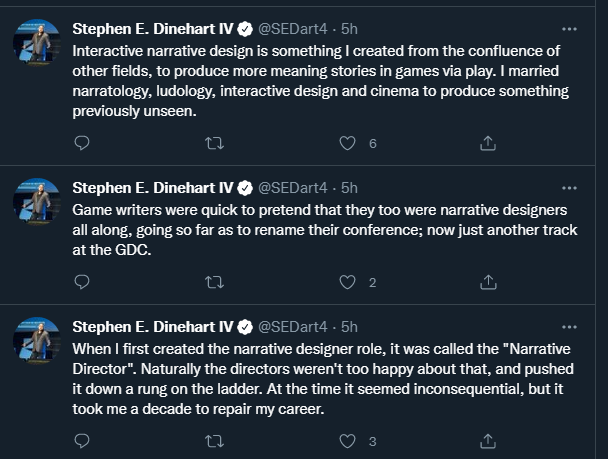
It’s all very, pre-first-draft roughed out ideas but then acted on with no awareness of how it reads because it’s not being read by the author. This makes it very funny when you remember that Dinehart, who can’t manage a simple adventure story or release a playable game, thinks he invented interactive narrative in games.11 Stephen Erin Dinehart (@SEDart4) (30 August 2021, X née Twitter) (now deleted, not archived)
5. The Themes
Despite the above, or perhaps because of the above, there are several distinct themes that are revealed in reading the “novel”. Due to the nature of AI, it is unclear how they were included – but I remind you that Dinehart had full editorial control.
A. Might makes right
The final thesis laid out by the antagonist leader, the commander of the Harvesters, is that it is foolish to try to conquer a people who worship nature, for they cannot be conquered. “This kind of people alone deserve to be referred to as “faithful” and can never be defeated except through genocide (which, now in the last chapter, they’re against, because “civilization”).
Specifically he cites that they had magic powers that could defeat science and their technology, so the enemy guerillas were able to simply wear them down and make it irrational for the Harvesters to continue their attempts to harvest.
Tuskaloosa wins his battles because he has the Sun Sword, and even divine intervention to make sure that he the most powerful in the encounter. He is never tested on his faith, set back through a failing to collaborate, or has a moment of revelation about the inherent differences between himself and his enemies.
He wins because he has the magic weapon that chose him, the magic weapon grants him the power to win any battle and the inherent favour of the gods. He doesn’t advocate for a democratic system because its been demonstrated to necessary or advantageous, he does it as an act of benevolence.
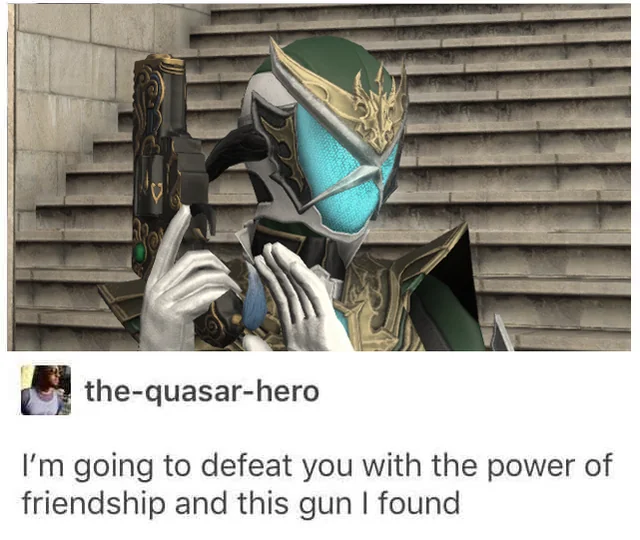
Might makes right, or rather, might finds its way into the hands of the righteous.
B. Good is doing evil to evil
There is this weird ongoing thing where now and againt Tuskaloosa will remember that the Sun Sword is an Intelligent Weapon (straight out of AD&D) and wants him to always be doing massacres for some reason.
There’s an attempt to justify this with weapons aren’t made to be just, they’re made to kill but it all kind of falls apart when you remember the weird trip that he got vetted and determined to be worthy of wielding it because he did not seek power for its own sake by the weapon (after it warns him about revenge).
So for it to spend the rest of the story encouraging him to pursue bloodlust and power at any cost, kind of implies it lied to him and everyone was just… okay with that. They’re even okay with him keeping it (rather than returning to the temple vault) knowing it’ll pick out a successor.
The final scene is Tuskaloosa looking over the resulting peace, and concluding that if he thinks he’s won… it must be the weapon tricking him. So… what the war and the bloodshed the whole point all the time? Apparently.
This is even weirder when you consider that this is all presented that both passing the weapon’s moral interrogation and then being selected as a champion of Gaea essentially makes adopting a blood thirsty weapon that years to corrupt and kill the innocent and evil alike is an ontologically good thing.
Murder, arson, destruction, war crimes – these are all fine things as long as you support managed democracy.
C. Being colonized is voluntary
There is an alternative reading to the Might makes Right theme, but its worse.
So, there’s a real problem with stories that revisit atrocities with the victims coming out on top – and that’s trying to work out how to get to that happy ending without victim blaming. Creating the “if they had done x then it would have been different”, such as Tarantino’s Inglourious Basterds proposing if jews simply did war crimes then Hitler would have been assassinated early on (fundamentally misunderstanding how things worked in the build up to World War 2), or basically any White Saviour story.
Wakanda is perhaps so inspiring to so many black people, because it is a rare example that avoids all of this with “what if there was 1 nation that had the power to avoid detection and thus colonization”.
In Tuskaloosa’s Reckoning the closing thesis provided by the Harvester admiral is: if a people worship their world and nature as a living thing, and remain faithful, then they cannot be conquered – only annihilated (which they also tried to in the story, but later deny they’d ever do).
I’m sure to Dinehart it seemed like a good idea at the time, taking the simplisitic idea that Native Americans worship nature instead of God, so that could be their secret weapon. But, in the context of the real Mississipian of the 1500s onward, the people who the story is supposed to be inspired by… what does that mean?
The people who were essentially stripped of their culture to the point they didn’t know of their own sacred sites, the people who don’t know what people their ancestors belonged to. Is that to say, their ancestors didn’t have faith? Their ancestors didn’t really commune with nature?
And again, I don’t think that this was Dinehart’s intention – it’s just a hazard of making a story like this in the same way that making a buidling game runs a risk of encouraging genocide or human trafficking.
This is particularly sad, because from the sound bytes I remember in now deleted videos – it seemed Jim Ward (an outspoken conservative) was kind of excited to be making a game about helping nature reclaiming the world.
6. Other terrible things
Yeah we’re not done.
A. Commodification of Native American culture
You’re probably not going to be surprised to read that the book doesn’t stop at using Tuskaloosa’s name and story. It seems to commodify the Cherokee language (Tsalagi) in bizarre ways (particualrly given that Dinehart claims to speak and read Tsalagi, and be Cherokee).
At one point Talasi goes to perform a ritual she refers to as “ama equa”, then defines a “the going to water”. Ama is Tsalagi for “water”, and there is a Cherokee spiritual practice of “going to water“. But equa means “large”, “equa awi” are large deer: elks.
During this, she announces a prayer in Tsalagi: “Nigada aniyvwi nigeguda’lvna ale unihloyi”
This is the opening line of the Constitution of the United States of America, in Tsalagi: “All human beings are born free and equal in dignity and rights.”
It becomes very strange when she follows this with: “All you waters, I have come to speak with you.”
Like, come on man… if you’re going to tell people you know the language and least double check what the AI writes in it!
And no, it is never explained why she switches between English and Tsalagi or why she has a Hopi name (“talasi” is Hopi for corn pollen, and they’re a desert dwelling people primarily in Arizona), numerous AI sites just put it down as “Native American”). In looking into this, I found some believe that Talasi may also be a loan-word used by Cherokee but taken from from Mvskoke (specifically the Creek within Mvskoke) language.
So we have a Mississipian-analog warrior priestess with a Hopi name, speaking Cherokee (which didn’t really with a name that is probably from another nation, partnered with a very mixed race leader of Mississipian-analog people wielding an Aztec weapon, and building (based off the lore from the game) Mayan pyramids. (The game definitely uses Mayan numbers, but ignores that they’re base-20 instead of base-10),
I don’t think you can really grasp the absurdity of this all until you try to apply all of this to the official GiantLands map yourself, to compare it and try to overlay it with maps of pre-colonization Native American groups made by people like Peter Klumpenhower or Native-Land.ca.
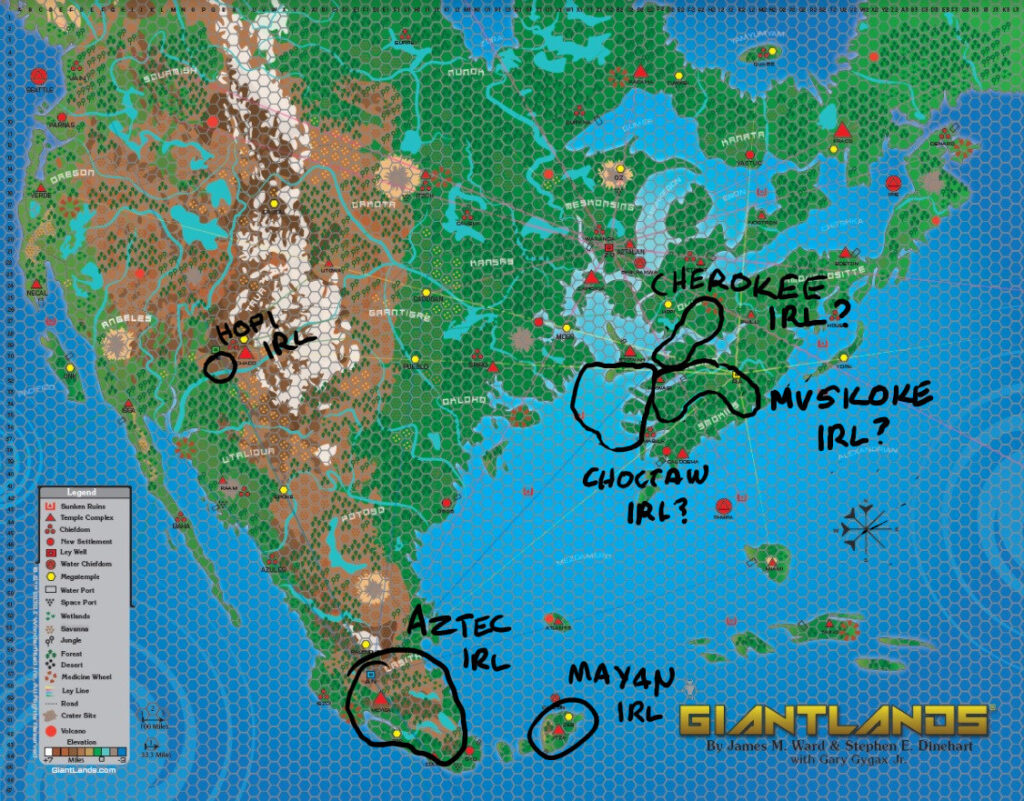
This is all blended not as cultural exchange or as the real cultures evolved themselves, but just as its all inherently the same culture. Fictional Mabila sits at the intersection of three major nations, but is just… whatever seems cool in the moment. It’s very difficult to see how this would be meaningful different from the same sort of shlock cultural appropriate that Native Americans regularly speak out against.
If you don’t want to trust Native American people on their opinion, let me sum it up: It’s the equivalent of if you told people you were writing a story about the French Resistance, and one of the main characters is named Dragan, drinks only Turkish coffee, randomly speaks Norwegian when praying and the main characters form the Catholic Church toward the end of the story.
There’s also an extremely cringe section where Tuskaloosa ruminates whether he is still Tuskaloosa or if he has entirely become the Black Warrior, as if Tuskaloosa was Mississipian for “Black Warrior”. Like that’s literally his name in his own language. “Am I Geoff, or am I Geoff?”
B. Questionable Self-Promotion
At the end of the book, Dinehart does claim the book honors his “Ingenous heritage” as well as his “longtime collaborators” who “passed during the creation of GiantLands”.
According to the Kickstarter, Dinehart met Kimber Eastland on the Gamma World RPG group, which only was founded in 2015 and Kimber passed away in 2020… so a maximum of 5 years for “long time” collaboration there. Ernie and Jim died after the release of GiantLands.
Dinehart also lists his credentials, that he pioneered the Narrative Designer role (he did not), worked on Company of Heroes (he worked on the Opposing Fronts DLC), Dawn of War: Soulstorm (that one he did work on), F.E.A.R. 3 (he did work on that, but was let go early in production)12 Dead Doman “FEAR 3: AFTERMATH- A Developer Interview Documentar” (8 October 2021, YouTube) <https://www.youtube.com/watch?v=Iep-IjCM8ak> and Prey (he worked on the cancelled Prey 2, not the Arkane release of Prey or the original).
An ongoing pattern with this, I should comment, is that he always just drops title names but can rarely talk about what he actually did that contributed to the product or how he worked with the rest of the team. I’ve seen him share more ideas for projects that he didn’t work on than ones he did.
For example he was he apparently pitched for the role of lead writer of Horizon Zero Dawn and felt he would have done better because the version as released, where the plot revolves around humanity having been made extinct, then brought back into a struggle for existence because someone assassinated the people who wanted humanity to flourish, and the knock on effect is humanity facing permanent extinction, was not edgelord enough.13 Stephen Erin Dinehart (29 September 2021, X née Twitter) (now deleted, not archived)
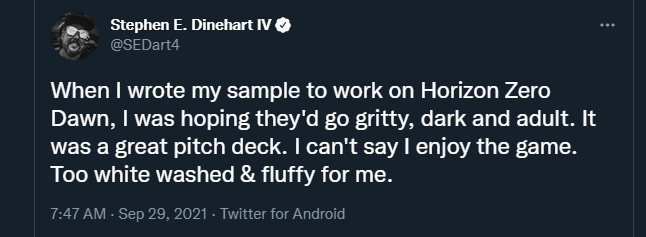
I guess it wouldn’t be a Dinehart product without this kind of weird, delusion self-promotion that goes nowhere though.
C. Questionable other promotion
The book begins and ends with a cryptic dedication, “Do not forget, we are still here.”
So it makes it very weird when the book tells you that you can support the Moundvilla Archaelogical Park and not say… Cherokee Nation (for Dinehart’s own heritage), Choctaw Nation of Oklahoma (for Tuskaloosa), any of the groups connected to those or any sort of non-profit to help Native Americans who are alive today.
Naturally the book ends with an ad for GiantLands which essentially claims that if you liked this story you should play GiantLands. This is bizarre both because pretty much nothing of note in the book is viable in GiantLands but because Dinehart doesn’t seem to realize that Talasi did sod all in the story.
The female character who is far more present, far more developed and far more involved is Kree-ah – an Avian Morph (bird person) who fucking loves guerilla warfare and honestly carries Tuskaloosa until he gets to his boss fights.
But I guess in Dinehart’s mind, the way you play GiantLands is with a party of 2, with 1 getting to be the prisoner who sits off to the side and doesn’t participate except to do weird faux mysticism nonsense.
Also like there isn’t even a macuahuitl in GiantLands. I am disappoint.
Notably though, there’s also a conspicuous absence in there of… literally any sort of other material related to his fellow Native Americans. I mean, there are plenty of Native American authors of speculative fiction, artists, musicians, etc. There are plenty of resources other than the 1 specific place he links to and people you would think he’d want readers to know about.
For example, John Romero, part of the team who turned a D&D campaign into the game that essentially defined a generation of first person shooter video games. In January 2022 he made a thread on Twitter (now X) 📸 about how it relates to his Yaqui and Cherokee heritage, and is an act of rebellion against the idea of “Kill the indian to save the man”.14 John Romero (11 January 2022, X née Twitter) <https://x.com/romero/status/1480806066078334977> (screenshot) One of the foundational creators of one of the most popular genres of video game is Native American and talked on the themes central to this story, and Dinehart doesn’t seem to know or care.
But he doesn’t even care about the foundation figures he knows and claims to care about: Not a mention of Metamorphosis Alpha, or Gamma World, or anything else by James M. Ward. Nothing about the communities built around the games Jim worked on. Nothing about Ernie’s works like The Marmoreal Tomb, and Sammi-Zowa Versus the Dueling Dragons. No encouragement to go support Jeff Dee (who has a Patreon), Larry Elmore (who has a site), or Steve Ince (who has a site).
It’s also pretty consistent with Dinehart’s previous stance on being expected to read… presumably the works of others.
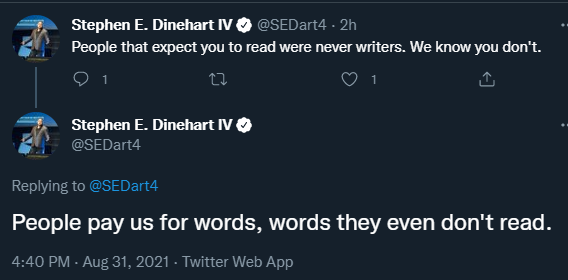
Combined it paints a picture of a man who sees community as an exploitable resource, not as a fundamental part of the human experience.
D. Sexism and other nonsense
As you’re probably guessing, male characters in this get to be the driving force in the plot while female characters get to be victims, captives, supporters and second-in-command. But you really can’t parse the full disparity and the absurdity until you get to the glossary and character glossary.
Tuskaloosa is in both the glossary, and the character glossary, apparently he’s just that amazing that he counts as an element of the world as well as a character. But let’s compare the descriptions given of several characters (I’ve ommitted the summary of their roles in the story).
Tuskaloosa – “Black Warrior.” Male, 6’4″, 35 years old. Paramount chief of Mabila. Mixed ethnicity (Indigenous/African/Asian features), deep bronze-brown skin. Long dark hair in warrior’s braids. Powerful build, covered in ritual scars and battle wounds.
You may have noticed that, aside from the promotion for Broken Road and this book, the only other thing publicly facing the GiantLands X née Twitter account is a claim that race is a myth. Yet here we have claim of mixed ethnicity, citing races for features for this particular character.
Compare with his love interest/partner/prize:
Talasi – “Daughter of Red Sky.” Female human, Tuskaloosa’s partner and co-leader. Powerful Ley-worker capable of sensing and manipulating earth energies. Athletic warrior’s build with ceremonial markings.
Athletic warrior’s build with ceremonial markings. That’s all we’re told about here. Is she also a mixed ethnicity? Doesn’t matter, what you need to know is she’s hot and she does the magic stuff for you and she’ll also fight alongside you… I mean Tuskaloosa.
No, Daughter of Red Sky is never explained. It only appears in the Harvester records regarding her and I have no idea why they would put that on her file. I suspect it was a lore snippet Dinehart invented and hoped the AI would so something cool with.
Descriptions for the aliens are similarly prioritized.
Sss’rath – Male Manquatti warrior and scout. Seven feet tall with iridescent green-gold scales. Third-hatched of his clutch. Expert hunter and tracker. Tongue flickers when tasting scents. Can see Ley Lines since hatching.
Kree-ah – Female Avian Morph. Scout and aerial warrior. Covered in iridescent feathers that shift colors (green, blue, purple, gold). Approximately 5 feet tall with an 8-foot wingspan.
Notice how Sss’rath gets a place in his clutch, an idiosyncrasy and his magic talent is clearly since birth – where as Kree-ah has only her bird traits explained (despite having substantially more personality) and Talasi’s mystic ability is framed in pure utilitarian process.
This is all par for the course for slop writing, particularly when people don’t employ editors who prioritize representation issues (or aren’t in a good position to advise on the particular issues). Where it gets grating is Dinehart’s smug sense of superiority that he is truly enlightened on race, gender, etc.
7. Conclusion
Tuskaloosa’s Reckoning is an objectively terrible book, whether is a worse book than the AI slop that was put out by proud Nazi, and primary writer for nuTSR, Dave Johnson is not a question I can answer but it is one worth asking.
The nuTSR slop and Dave’s weird novels about fantasy version of him and Justin LaNasa were terrible and were also clearly by Nazis for Nazis. Dinehart’s book is not as inherently offensive, but presents itself as the voice of Native Americans and the author (the human one) presents himself a progressive (and enlightened).
Representation matters, which is why its important that what is presented as good representation is actually good and not garbage and not in garbage products. I cynically suspect the reason Dinehart leans so hard into the Native American angle is because he knows, or suspects, that without it he has nothing meaningful to offer.
Nobody wants to be represented as a derogatory cartoon of themselves, but also nobody really wants their representation to be in low effort slop from a man who isn’t interested in giving back to or standing up for his communities. Nobody wants to be the star of a boring story that makes less sense the more attention you pay.
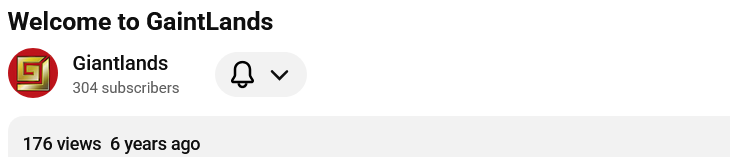
Even the earliest promotions for GiantLands, which predated easy public access to generative AI was self-agrandising, low-effort slop using stock footage and taglines that turned out to be irrelevant to the final product, he didn’t even bother to spell giant properly the first times.15 Stephen Erin Dinehart IV “Welcome to GaintLands™! Who will you become?” (16 July 2019, GiantLands, YouTube) <https://www.youtube.com/watch?v=SPkm1wKf_tE>
Stephen Erin Dinehart IV “Welcome to GaintLands” (15 June 2019, GiantLands, YouTube) <https://www.youtube.com/watch?v=OP7sGWjYovw>
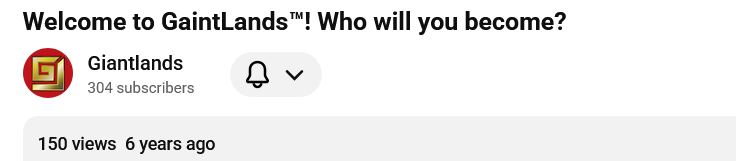
It is a bad story, poorly written that can really only serve as a good example of what happens when you give an Ideas Guy who claims to love creativity but thinks he’s above learning, above failure and does not take joy in the process access to resources without supervision or accountability.
The use of names of alleged and unwitting contributors is vulgar and distasteful in a way that shouldn’t need to be explained. By the same logic that Dinehart applies the name of James M. Ward, anyone who writes a module or fan story for the Forgotten Realms can claim to have collaborated with Ed Greenwood. Especially if it involves drow breast milk… oh Ed.
That it supposedly advocates reverence for nature, avoiding becoming reliant on technology rather than “old ways” and is pumped out as AI slop with no thought to quality or the impact on the environment is noteworthy but somehow the most banal of its sins.
It is a wrong thing, a thing that should not be except as a compelling case against allowing the publication of novels written by generative AI, and an illustration of why you should avoid working with Ideas Guys who are not interested in the actual craft and processes of creating.
Coming next
Well, my copy of The Broken Road arrived…16 James M. Ward & Stephen E. Dinehart “The Broken Road” (15 November 2025, Wonderfilled, Amazon Print on Demand)
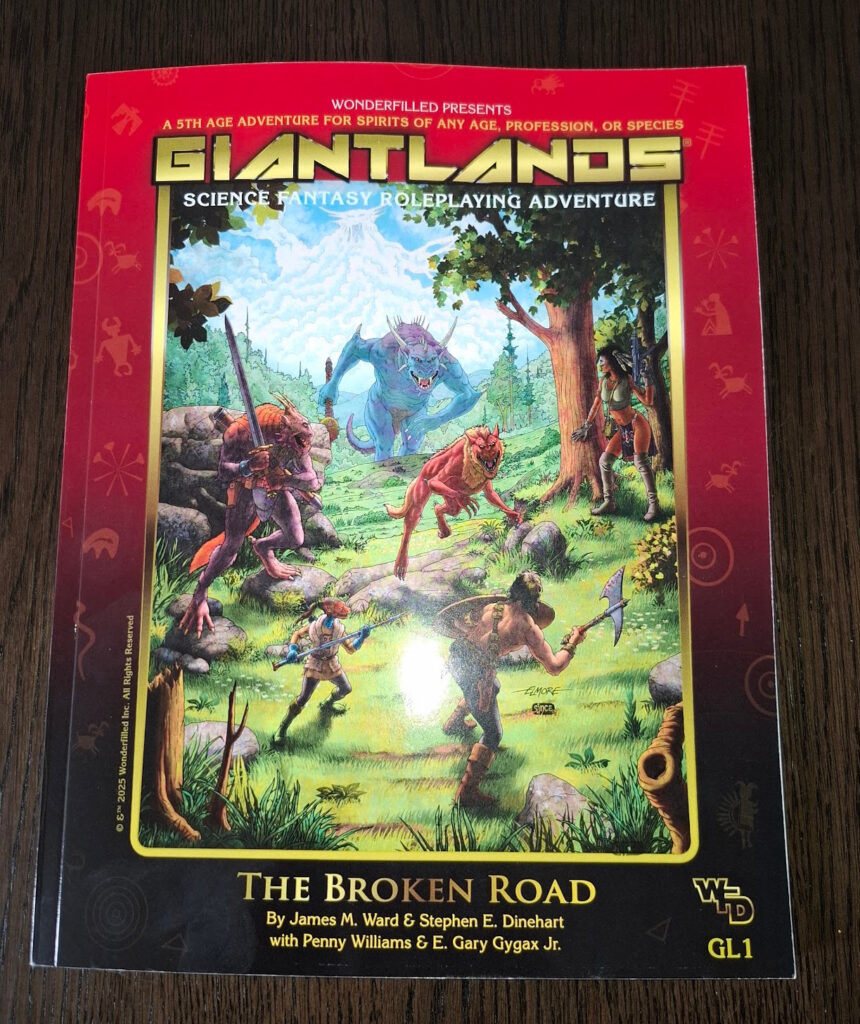
And it is not off to a good start…
- 1Stephen Erin Dinehart IV as “GiantLands” (29 November 2025, X née Twitter) <x.com/GiantLands/> ↩︎
- 2Stephen Erin Dinehart IV Tuskaloosa’s Reckoning: The Sun Sword (15 November, Wonderfilled Inc, Amazon Print on Demand) (Tuskaloosa’s Reckoning) ↩︎
- 3Stephen Erin Dinehart IV (24 August 2021, X née Twitter) (now deleted, no archive available) ↩︎
- 4Tuskaloosa’s Reckoning, above n 2, page 105 ↩︎
- 5Several_Flower_3232 “I’m actual Ed Greenwood here to talk about drow breastmilk” (23 March 2024, r/DnDcirclejerk, Reddit) <https://www.reddit.com/r/DnDcirclejerk/comments/1bm2aaw/im_actual_ed_greenwood_here_to_talk_about_drow/> ↩︎
- 6Lynn D. Jung “you don’t know the full truth about generative ai ‘writing'” (27 July 2025, YouTube) <https://www.youtube.com/watch?v=hVo2dQevVBg> ↩︎
- 7In The Thorns “AI Writing Is Trash, But AI “Writers” Will Never Notice” (30 November 2024, YouTube) <https://www.youtube.com/watch?v=TQ8YkstQ4dE> ↩︎
- 8Matt Mckeown “Where Does The Press F To Pay Respects Meme Come From?” (11 April 2024, The Gamer) <https://www.thegamer.com/press-f-to-pay-respects-call-of-duty-meme-origin/> ↩︎
- 9Tuskalossa’s Reckoning, above n 2, at page 112 ↩︎
- 10Above, at page 172 ↩︎
- 11Stephen Erin Dinehart (@SEDart4) (30 August 2021, X née Twitter) (now deleted, not archived) ↩︎
- 12Dead Doman “FEAR 3: AFTERMATH- A Developer Interview Documentar” (8 October 2021, YouTube) <https://www.youtube.com/watch?v=Iep-IjCM8ak> ↩︎
- 13Stephen Erin Dinehart (29 September 2021, X née Twitter) (now deleted, not archived) ↩︎
- 14John Romero (11 January 2022, X née Twitter) <https://x.com/romero/status/1480806066078334977> (screenshot) ↩︎
- 15Stephen Erin Dinehart IV “Welcome to GaintLands™! Who will you become?” (16 July 2019, GiantLands, YouTube) <https://www.youtube.com/watch?v=SPkm1wKf_tE>
Stephen Erin Dinehart IV “Welcome to GaintLands” (15 June 2019, GiantLands, YouTube) <https://www.youtube.com/watch?v=OP7sGWjYovw> ↩︎ - 16James M. Ward & Stephen E. Dinehart “The Broken Road” (15 November 2025, Wonderfilled, Amazon Print on Demand) ↩︎
2 thoughts on “I read: Tuskaloosa’s Reckoning: The Sun Sword”