
I read it1Ken Whitman The Whitman Method: Becoming a Great Games Master in the Face of Chaos (2026) Ken Whitman as Ken Whitman Game [Ken’s Book] and watched all the videos2Ken Whitman (as Whit Whiman) & Google NotebookLM The Whitman Method: Episode 1 — The 12 Steps To Masterful Game Directing (15 April 2026) Whit Whitman (@whitwhitman) YouTube <www.youtube.com> [Ep1]
Ken Whitman (as Whit Whiman) & Google NotebookLM The Whitman Method: Episode 2: Mastering The Essential Session Zero (17 April 2026) Whit Whitman (@whitwhitman) YouTube <www.youtube.com> [Ep2]
Ken Whitman (as Whit Whiman) & Google NotebookLM The Whitman Method Surviving Tabletop Chaos (21 April 2026) Whit Whitman (@whitwhitman) YouTube <www.youtube.com> [Ep3] so you don’t have to.
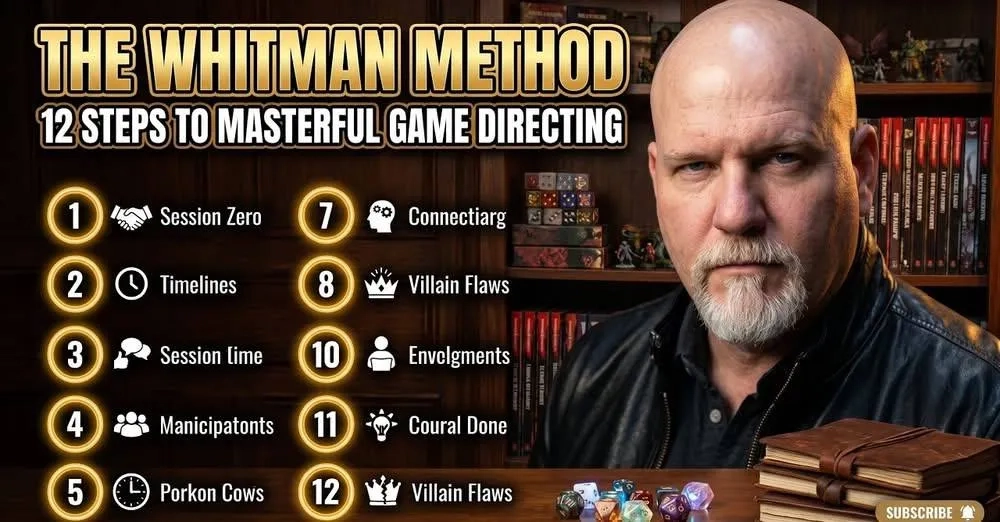
That’s right. Ken Whitman, the least trusted man in table top role-playing games (TTRPGs) wants you to watch his videos buy his book so he can teach you how to be a master Games Master(GM) via the magic of Manicipatonts, Porkon Cows, Connectiarg, Envclgments and Coural Done—and I am could not stop myself from gazing into this abyss, now I need to share the curse.
This is only going to cover this particular shit show, so if you’re just curious what Ken is up to I recommend you check out Not Another Dime (For Ken Whitman).3Face Not Another Dime (For Ken Whitman!) Blogspot <notanotherdime.blogspot.com>
This is all AI slop, the notes in the video are particularly funny, and so is the cover and the table of contents.
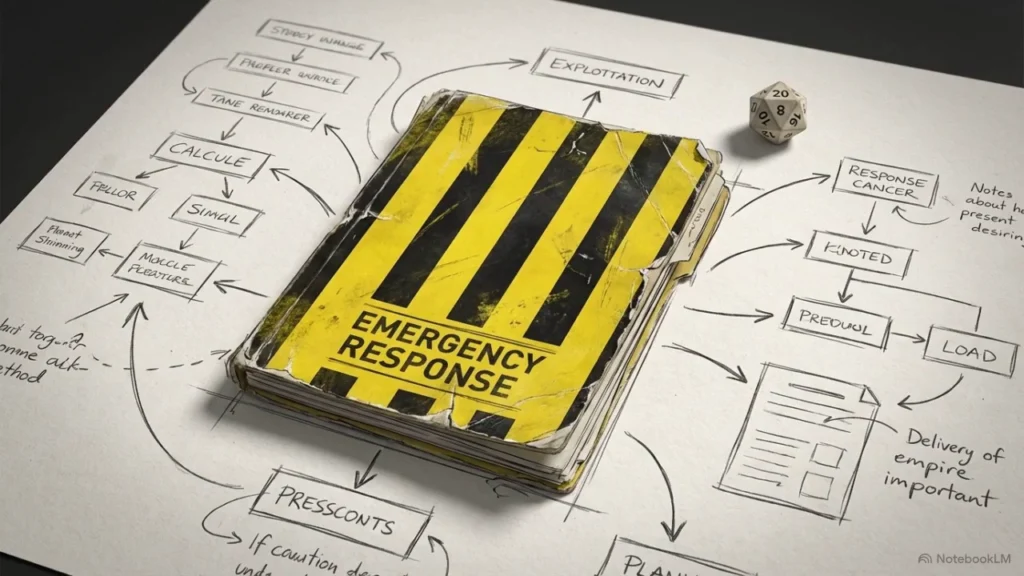
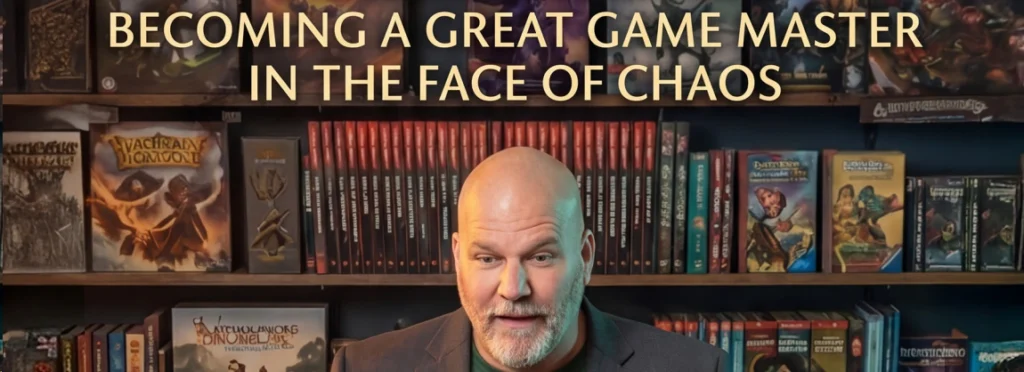
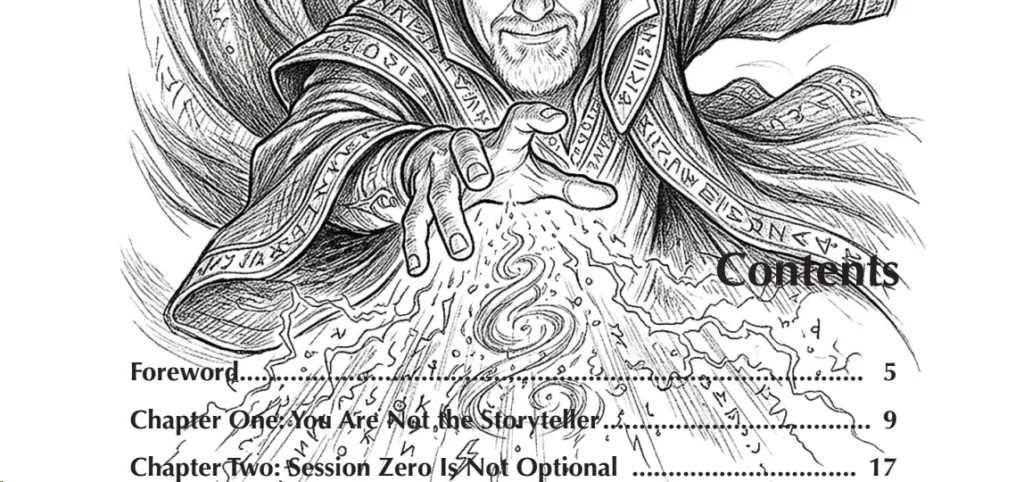
The text is also obviously AI generated from the moment you look at the foreword.4Ken’s Book, above n 1, at 7 That’s before you factor in that Ken is not exactly a great writer when left to his own devices.
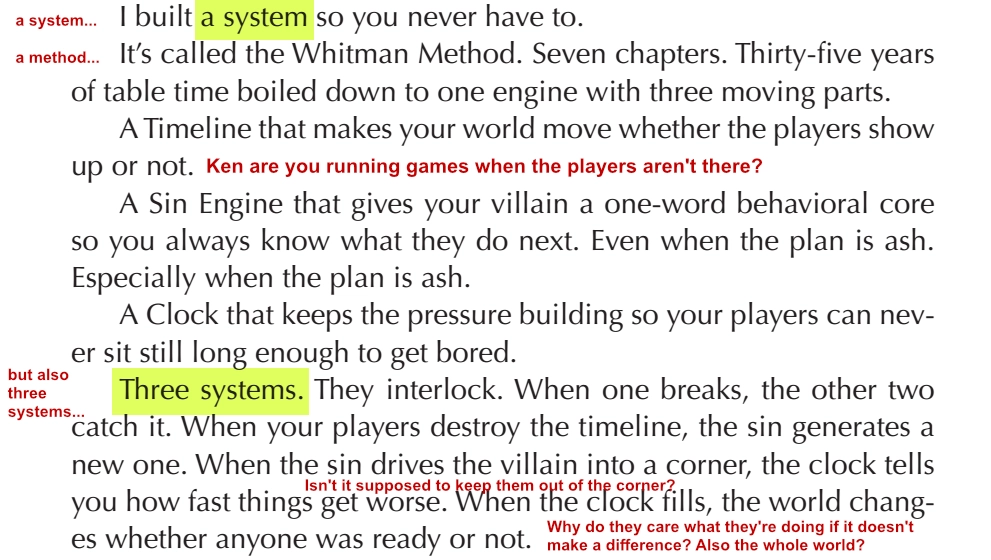
Also some of the illustrations are just, magical…
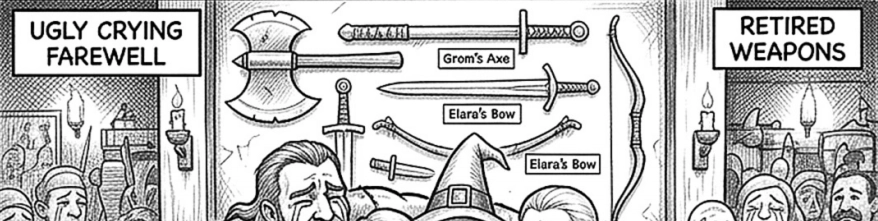
…when you read the AI generated biography that says Ken is an editor.

Credentials
Ken claims that he has had more games go sideways into chaos than most people have ever played, which as far as credentials go is a bit like a surgeon claiming they’ve had more patients die on the table than most surgeons have operated on.5Ken’s Book, above n 1, back cover at It raises the question of what are you doing that leads to this scenario?
While a surgeon might answer with a simple and comprehensive explanation – such as that they work in triage or a very difficult last resort type of surgery. In Ken’s case we receive no such explanations or assurances.
Specifically he claims he’s been running games since 1989 (same), and he published Mutazoids(1989… wait that’s the year he started running games), co-designed Ralph Bakshi’s Wizards RPG(1992), “oversaw” “Traveller 4th Edition” (Marc Miller’s Traveller, 1996) and “WWF Tabletop RPG” (WWF Basic Adventure Game, 1993).6Ken’s Book, above n 1, back cover Weird he doesn’t even know the actual names of the products he worked on, and the 3rd video specifies he started “rolling” dice in 1981.7Ep1, above n 2, at 1:00
So basically a bunch of games he made before the Internet, many of which you’ve doubtlessly never heard of even if the correct titles are used – certainly nothing since the d20 system came out or anything comparable to Dungeons & Dragons(D&D). Also he clarifies that there’s over 30 games he’s shipped but no other titles (is he counting TSR Inc products that shipped while he was a Convention Coordinator? Who knows.
(Also the “About the Author” at the back claims Ken was diagnosed with ADHD in his forties, which honestly I’m glad he got a diagnosis and access to help – but seems very strange when he points to all his accomplishments before this as his credentials before insisting the he then built the systems after this.)8Ken’s Book, above n 1, at About the Author, pp 74-75
Lastly the back of the book he claims to have been designing games since 1989, and “the best Game Masters aren’t more talented than you. They just have better architecture.”9Ken’s Book, above n 1, back cover
Personally I’d be suspicious about the architecture of those 30+ games then.
Copy
So, the original thumbnail, which is so beautiful we just need to look at it again promised amazing things, in 12 steps.
These are to promote the book which promises you is a 3-part, interlocking, self-correcting system which is summarized in 7 chapters… wait…
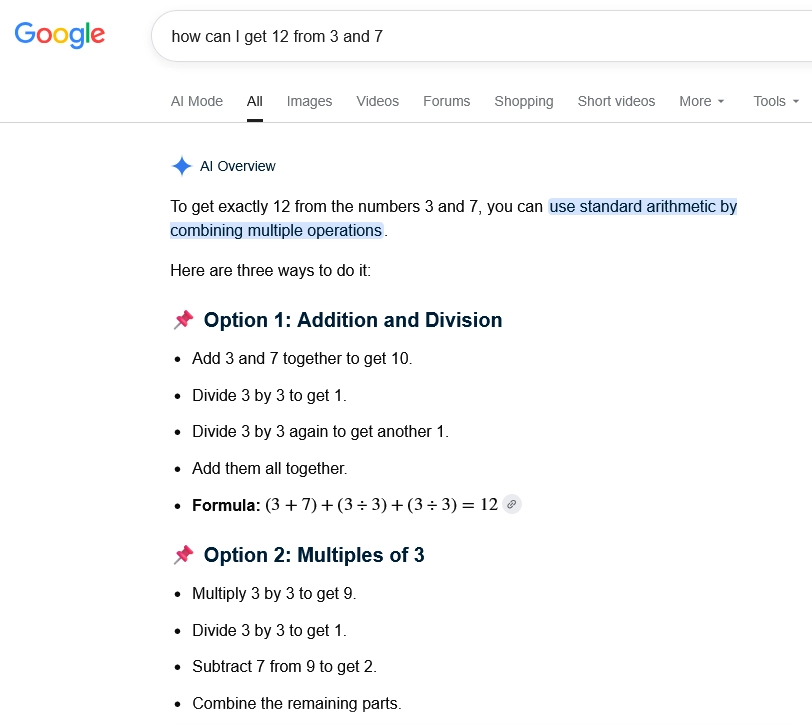
Starting to get an insight into why all Ken’s games devolve into chaos.
Product
So, I thought about writing a real long breakdown of this, but really Ken’s entire proposal on how you can become a top tier game master is:
- Write a story for what would happen if the player characters don’t get involved, so you can throw it away the moment the players make a decision.10Ken’s Book, above n 1, at Chapter One: You Are Not the Storyteller, pp 12-16
- Generic advice to run a Session Zero.11Ken’s Book, above n 1, at Chapter Two: Session Zero Is Not Optional, pp 19-13 Ken in fact, dedicates the entire 2nd video to this.12Ep2, above n 2
- Run every game as though it’s Powered by the Apocalypse(PbtA) regardless of the system, premise, tone or what the group wants13Ken’s Book, above n 1, at Chapter Three: Failure Is Not a Dead End, p 25 (also Ken does not understand how PbtA works);14Above, pp 26-30
- Use his frankly incomprehensible Seven Deadly Sins system where you write a single word, but have to memorize a specific (counter-standard) definition and ruleset based on that word.15Ken’s Book, above n 1, at Chapter Four: Give Your Villain a Sin, pp 31-42, Chapter Five: When Everything Breaks, p 44, Chapter Six: Three Systems, One Engine, pp 55-56
- Use the session division techniques for Blades in the Dark (BitD).16Ken’s Book, above n 1, at Chapter Six: Three Systems, One Engine, pp 53-54
- Limit combat to 3 rounds when possible, 5 rounds at maximum.17Ken’s Book, above n 1, at Chapter Six: Three Systems, One Engine, pp 56-63
Also you should develop general emotional intelligence, social skills, organizational skills and writer skills completely independent of his advice. Y’know, git gud.
Plotting
Ken regularly gives terrible writing advice – this may be due to outsourcing the writing to a Large Language Models (LLMs) which have a high degree of fluency but an absence of understanding or overall coherency.
In the example plot for the characters to interrupt, it provides no meaningful motivation for anyone to interrupt – merely the political machinations of a disgraced noble who apparently has infinite resources and will succeed in 2 weeks.18Ken’s Book, above n1, at Chapter One: You Are Not The Storyteller, p 13 It then later says if your players don’t show up it’s because you didn’t induce the right kind of fear in them.19Above, at p 15-16
This is, in itself, a pretty toxic approach to GMing since even in games with fear as a primary theme (Call of Cthulhu, Kult, etc) it is not the driving motivation for the party, because they will quickly burn out if it’s just fear all the time.20Alanah Pearce i NEED to talk about Obsession (29 May 2026) @alanahpearce YouTube <www.youtube.com> Generally the drivers are things like principle, curiosity, ambition or revenge.
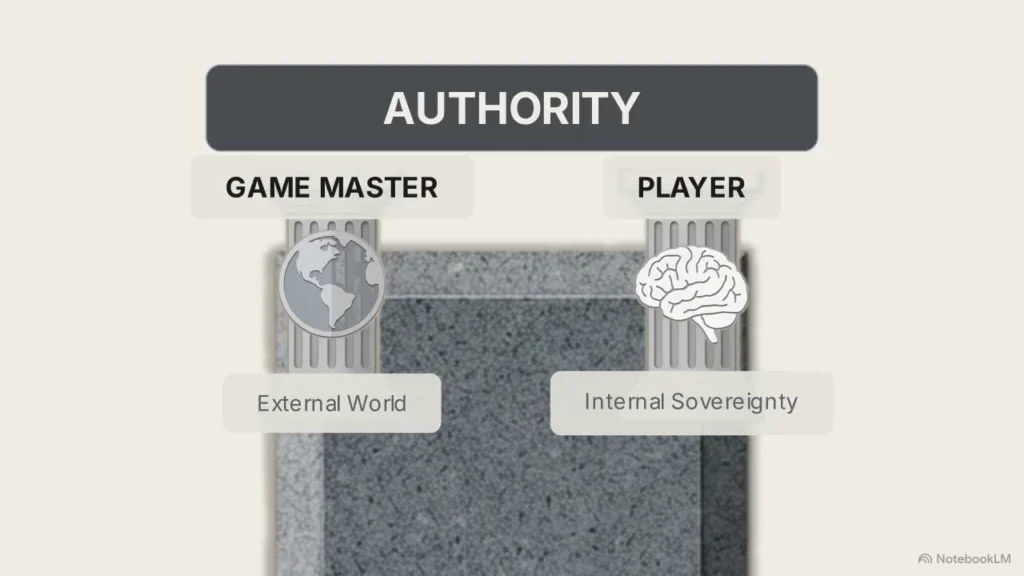
Notably no part of this stage proposes you think about your players as individuals, or how you might include a variety of motivations for a party of individuals to unite on a single adventure. This is very, very funny when you consider than in the 2nd video, while discussing the session zeroes – it stresses that player’s have “absolute internal sovereignty” over their thoughts and feelings.21Ep2, above n 2, at 2:00 There worst take on a popular theme.22Literally Everyone Else in the World | Music Video | Oxventure D&D (28 November 2019) Oxventure (@Oxventure) YouTube <www.youtube.com>
The demonstration of how skill checks should work both demonstrates no inherent understanding of PbtA or even trying to run a story. It essentially proposes that a failed lockpicking check should result in you re-writing the entire story to about that roll.23Ken’s Book, above n 1, at Chapter Three: Failure Is Not a Dead End, pp 26-28 Raising the question of why bother writing a story in the first place, or using the “Sin Engine”.
It is nowhere near as fun as that makes it sound like it should be. Not only does it create a scenario where agency is non-existent, it puts immense pressure on the GM to ensure the game is always changing dramatically.24Ken’s Book, above n 1, Chapter Three: Failure Is Not a Dead End, p 28 Unlike that actual goal of PtbA, to make keep the story moving and developing beat by beat, regardless of the rolls, thus encouraging players to have a go and be creative.
Sincore
Alright get your spanking paddle out as the Sin Engine begins by talking about the Futurama episode where Bender met God.25Ken Keeler Godfellas (17 March 2002) S3E20 Futurama That should tell you everything you need to know about how well this is developed and how tight the focus is.
This idea essentially boils down to you limit yourself to 7 archetypes for your villains, all of how are irrational and many of them overlap to a degree that they may as well be identical. He names these after the Seven Deadly Sins of Catholicism, but the definitions and guidance have nothing to do with it.26Ken’s Book, above n 1, at Chapter Four: Give Your Villain a Sin, pp 31-37
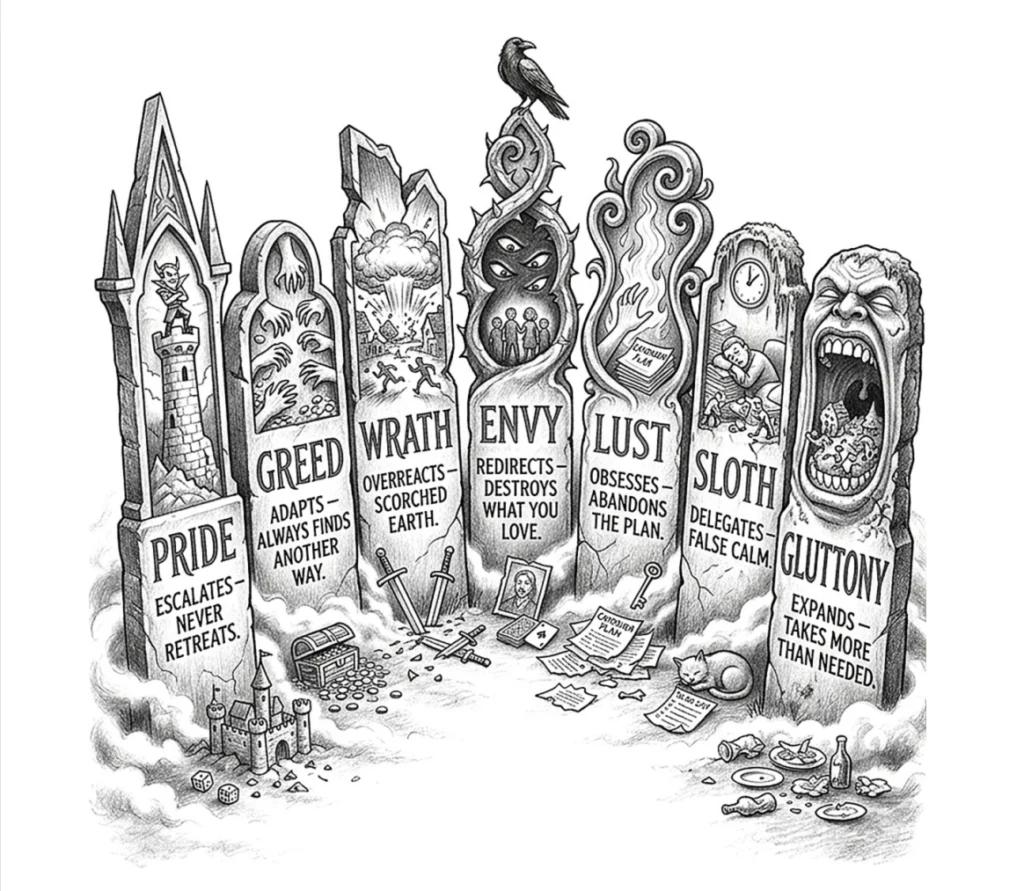
Worth noting, in addition to requiring you do to a lot of thinking and work on the fly—none of these would help you with the scenario pitched in the first video. If the party has just bypassed all defences and slaughtered the villain then they can not do any of these things because they are dead.Ep1, above n 2, at
While there are paragraphs and paragraphs of text about it, completely undermining it as a useful shorthand or system. It certainly falls short of the promised “one word catalyst”.27Ep3, above n 2, at 1:40 Ken genuinely seems to expect you to spend the time you could have thinking of your own non-player characters, premise for a dungeon, etc memorizing his ridiculous system. Simplify your game by memorizing 2… wait there’s also PbtA and BitD… 4 sets of mechanics that aren’t made to work together.
It is a ridiculous system, which is highly prescriptive but does not instruct, thus if you have the mastery to employ it – you do not need it. Also when you see the amount of overlap it’s more like 4 archetypes – so basically make your players do the same 4 adventures over and over.
Combat
Then he tells you to do it with combat, which he describes as boring – and proposes that you should make it 5 rounds maximum so just use the biggest monsters possible but half their hit points and make it as simple as possible so you can then add a whole bunch of complications. Also try to make it as long as possible with random twists to make it meaningless.28Ken’s Book, above n 1, at Chapter Six: Three Systems, One Engine, pp 56-59
I don’t think I need to explain that while this can work for all kinds of TTRPGs, it is absolutely incompatible with classic dungeon crawlers.
He proposes that a good battlemap ruins combat by being “too right” and taking the thinking out of it – like a chess board does.29Ken’s Book, above n 1, at Chapter Six: Three Systems, One Engine, pp 57-58 This is a very long way to say that he proposes theatre of the mind and does not understand the appeal of chess, crunchy combat or player agency.
He then goes on to claim Jennell Jaquays “wrote about non-linear dungeon design decades ago.”30Ken’s Book, above n 1, at Chapter Six: Three Systems, One Engine, p 58 A more honest way to put it would be she pioneered it,31Jennell Jaquays (as Paul Jaquays) Caves of Thracia (1979, Judge’s Guild, USA) and that he’s spent basically the whole of this book to date shitting on her meticulous approach to design. Also as a side note Ken: her dungeons were not battle maps because nobody’s were back then, but Quake III certainly had battle maps so we can safely say that she was not ideologically opposed to them—as a real game designer she recognized they had a place when they served the game.
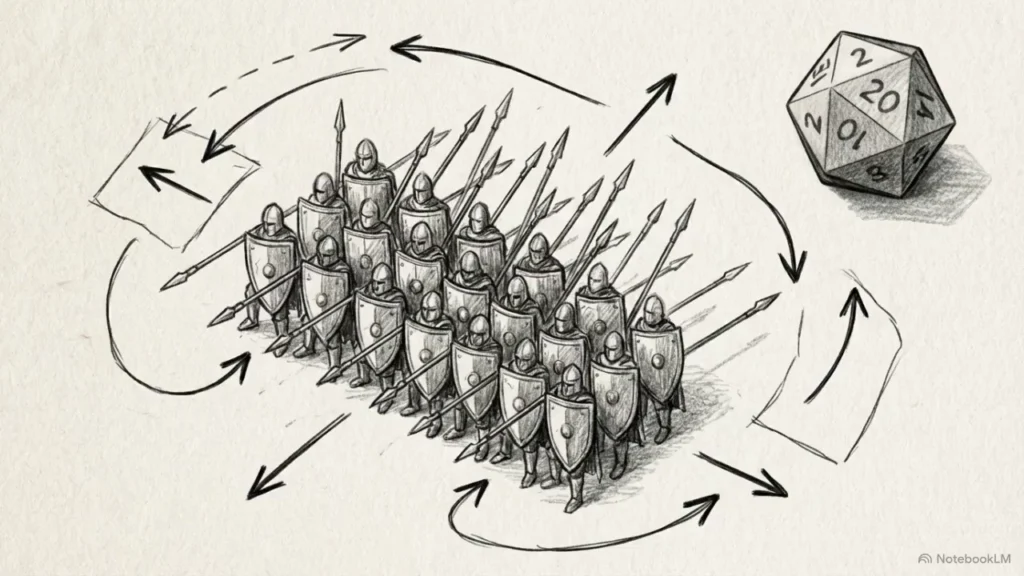
Then finally he gets to his idea: no grid, just five zones and its basically freeform combat with no regard for the mechanics.32Ken’s Book, above n 1, at Chapter Six: Three Systems, One Engine pp 58-59 Basically Ken doesn’t want to play D&D, BitD, a game in the PbtA tradition or any game with combat mechanics but wants to pretend he is. Though Ken claims in his game there real rolls, limitations on the players or reason to every believe the battle might go against the party, real drama.
Then he spends 2 pages with this incredibly hard to follow story where the fight supposedly takes place in this very complicated layout – but it’s barely a fight because it’s a warehouse full of oil barrels and cultists, with a party of a rogue, fighter and wizard who can cast fire bolt. They basically just strolled in and did a mass murder in a setting of unclear basis, and to Ken that’s amazing.33Ken’s Book, above n 1, at Chapter Six: Three Systems, One Engine pp 59-62
(In true AI writing fashion, this encounter has nothing to do with the example plot he’s created and its extremely unclear why there’s a rogue and a wizard in a warehouse with oil barrels. Presumably Ken just forgot to include instructions to reference or explain in the prompt.)
After which he proposes it’s good because nobody said “I moved to G7 and attacked.” but like, literally all the fighter did was say “I charge in and attack”. Just the wizard’s player and the rogue used their abilities completely unchecked, and got to describe everything like it was cinema.34Ken’s Book, above n 1, at Chapter Six: Three Systems, One Engine pp 59-60
Honestly at this point I guess I should just be grateful he didn’t say it was the “Exalted tradition”. I mean he does drop “Minds Eye” in there in a way that seems to suggest he thinks all games should really be LARPs.
Crisis Management
Ken calls it the “Disruption Response Protocol”, but it always seems to focus on the idea of your game falling into absolute crisis for anything from the players had a clever solution to a situation, to you have a toxic player who just wants to ruin the campaign for laughs.
It’s a very strange stance given that the various hazards are well discussed in by multiple (actually competent) creators as listicles35Johnny Chiondi 7 Ways D&D Players Destroy Their DM’s Plans (21 August 2019) Oxventure (@Oxventure) YouTube <www.youtube.com> and even entire playlists of long form content.36Seth Skorkowsky RPG Philosophy on Seth Skorkowsky (@SSskorkowsky) YouTube <www.youtube.com>
Ken promises he has a 5 step program for fixing literally any problem that can happen at the time.37Ken’s Book, above n 1, at Chapter Five: When Everything Breaks
This rock solid, crystal clear protocol is:
| Step | Source | 1st Video38Ep1, above n 2, at 0:30 | Summary in Book39Ken’s Book, above n 1, at Chapter Five: When Everything Breaks, pp 45-46 | Also 1st VideoEp 1, above n 2, at 2:00 |
| 1 | Timeline | Breathe | Identify & Test Break |
| 2 | Timeline | Name the sin | Determine Motive / Apply Sin |
| 3 | Sin-Clock Engine | Ask the consequence question | Update Tracker / Advance Clock |
| 4 | Sin-Clock Engine | Advance the timeline | 3-Round Combat Constraint |
| 5 | Combat Constraint | Present a choice | ? ? ? |
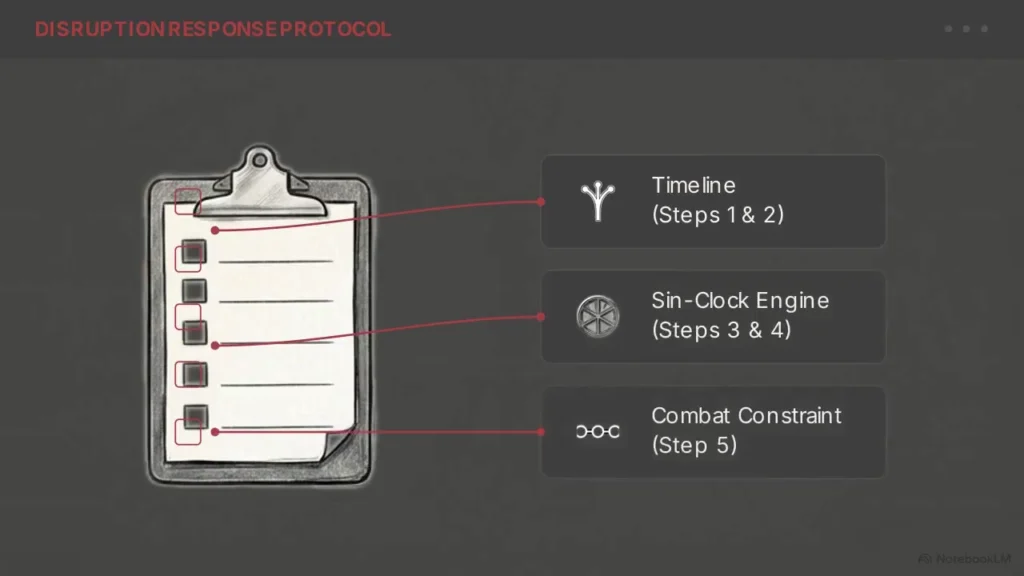
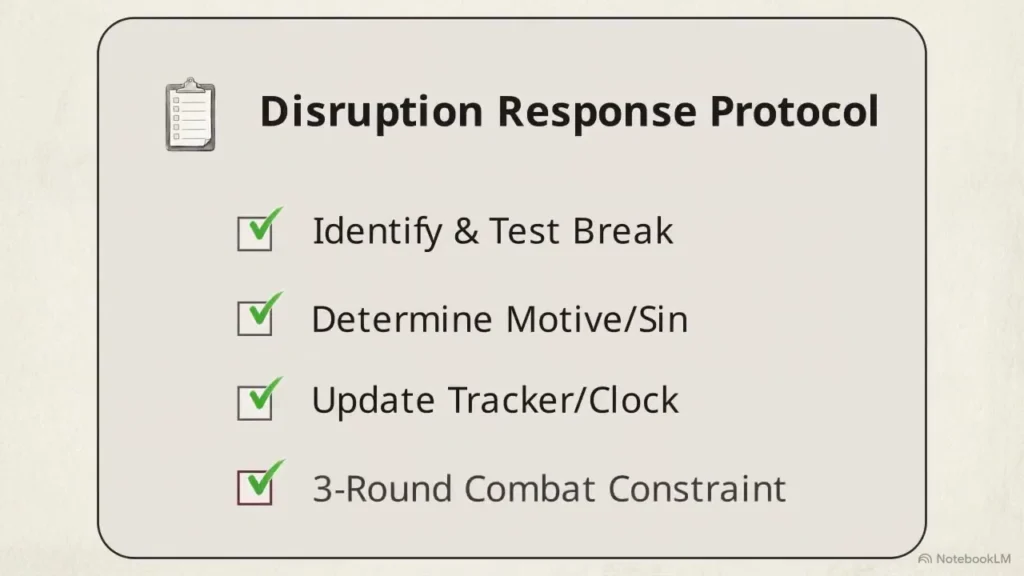
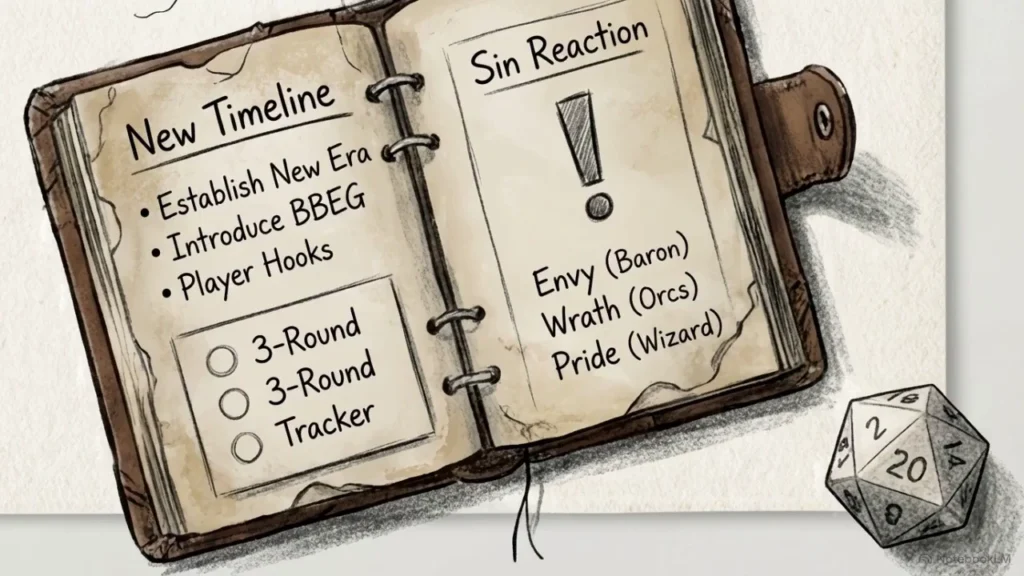
Despite the supposed importance of this protocol, it’s never really elaborated on in an useful way – the videos simply provide frankly baffling screenshots and the book quickly moves on to telling you the shocking idea to… treat your players like people and develop your social skills.40Ken’s Book, above n 1, at Chapter Five: When Everything Breaks, pp 45-49 Amazing stuff and truly a unique take.
So the main takeaway here is if you follow Ken’s method, your group will have a disruption and he has no actual ideas on how to deal with it. That’s a you problem.
RIP Your Campaign
So now your players are really pissed off because you promised them everything and delivered them an unplayed mix of Catholic theology, PtbA, BitD, D&D, Minds Eye Theatre and Exalted rather than the game they wanted to play.
How do you end the campaign?
In 3 sessions, but also in 5 minutes where you ask people to tell you what their players do next. How Ken knows this when he doesn’t know how long your sessions are, unclear.41Ken’s Book, above n 1, Chapter Seven: How to End a Campaign, pp 64-66 The exceptions is if they all die in a Total Party Wipe, in which case fuck it, and fuck them (I guess).42Above, p 66 Or you can also just stop at any time with 1 final scene.43Ep2, above n 2, at 3:50
Then it gives you some generic advice to just be a good GM—then book pivots into trying to make it an emotional arc that you finished learning all Ken has to teach you, and now after he’s told you how to end your campaign you should go start it and try using some of his stuff and also it probably won’t work but if you keep doing it long enough you’ll stop thinking about it.
He also stresses not to care about the players who leave your campaign, but to keep going until you get some positive feedback – and then latch onto that.
Conclusion
The Whitman Method is not a method, it does not contain any of the advice that it promises to and it will not make you a better GM. Ken has nothing to teach, because Ken has never invested the effort to learn. Ken has, in fact, spent more effort justifying his being too lazy and arrogant to engage properly with systems than he has even learning the basics. He is, in fact, the target demographic for AI writing courses.44AI Writing Is Trash, But AI “Writers” Will Never Notice (30 November 2024) In The Thorns YouTube <www.youtube.com>
He decided he was an expert who could start putting out commercial games the same year he started running them because he assumed there was nothing to learn. He can point to his ADHD, or other problems all he likes, but that’s the core issue.
All his ideas are stolen from other, better creators who genuinely worked to refine their craft – half of which seem to come from White Wolf. They are all treated callously by Ken, making no effort to genuinely appreciate them and shows no awareness he’s basically shitting on the work of the creators at TSR Inc.
That’s worth mentioning because everything in the book seems to suggest that, despite his own first game being a sci-fi type – Ken is still operating on the assumption that all TTRPGs are sword-and-sorcery type adventures.
None of the games he steals from, not even the White Wolf games, are intended to be run together or share design goals or ideas. They’re just shit that has been popular and noteworthy over time and that someone thinks they can sound cool by citing or borrowing from.
But this may in fact, not be the worst thing that Ken Whitman has written, that relates to TTRPGs. There is something even worse than the 4 Pillar Games web site45Morrus “Ken Whitman creates bizarre AI-powered biographies of TTRPG designers” (12 May 2026) EN World <www.enworld.org>
Lin Codega “AI-generated profiles of TTRPG designers ignite fury across social media” (12 May 2026) Rascal News <www.rascal.news> that has now rebranded to Tabletop Game Icons,46Ken Whitman Tabletop Game Icons <www.tabletopgameicons.com> with accompanied AI slop YouTube channel.47Ken Whitman Most Influential Tabletop Game Icons (@MostInfluentialGameGameIcons) YouTube <www.youtube.com> (Yes it’s GameGame)
That would be his $39 US pre-prompt prompt that you feed into an AI system and it apparently does all this for you.48Ken Whitman Game Master: Make your Ai Assistant do the Hard Work PeioSync <www.pieosync.com> You can get ChatGPT/Claude/Gemini to do The Whitman Method for you for just 500% the recommend retail of the book (plus your subscription/token costs for the LLM). As a PDF, not a Markdown file, so the format may not work with your LLM of choice.
Of course, Marc Andreessen already shared his more powerful AI pre-prompt49Marc Andreessen Current custom AI prompt (4 May 2026) @pmarca X née Twitter <x.com> prompt for free recently.50Victor Tangermann Marc Andreeessen Mocked for Accidentally Revealing That He Seems to Have a Deep Misunderstanding of How AI Actually Works (6 May 2026) Futurism <futurism.com>
Not sure either is really different from just yelling at your favourite AI psychosis inducing app to “Write a perfect role-playing game for me, and make no mistakes!“51Singha makeNoMistakes (12 August 2025) u/_sonu_singha in r/ProgrammerHumor Reddit <www.reddit.com> After all, neither of them wants to address things like LLMs inability to prevent hallucinations, tendency to fall into repetition, or that the more information you want it to process the more tokens you have to pay for. So even if LLMs was a solution for this, they wouldn’t know how to implement it.
My take, Ken just admit you’re mad you weren’t cool enough to make Thirsty Sword Lesbians and move on. Life’s short, you are not a good GM and you never will be until you commit to putting in the effort.
- 1Ken Whitman The Whitman Method: Becoming a Great Games Master in the Face of Chaos (2026) Ken Whitman as Ken Whitman Game [Ken’s Book] ↩︎
- 2Ken Whitman (as Whit Whiman) & Google NotebookLM The Whitman Method: Episode 1 — The 12 Steps To Masterful Game Directing (15 April 2026) Whit Whitman (@whitwhitman) YouTube <www.youtube.com> [Ep1]
Ken Whitman (as Whit Whiman) & Google NotebookLM The Whitman Method: Episode 2: Mastering The Essential Session Zero (17 April 2026) Whit Whitman (@whitwhitman) YouTube <www.youtube.com> [Ep2]
Ken Whitman (as Whit Whiman) & Google NotebookLM The Whitman Method Surviving Tabletop Chaos (21 April 2026) Whit Whitman (@whitwhitman) YouTube <www.youtube.com> [Ep3] ↩︎ - 3
- 4Ken’s Book, above n 1, at 7 ↩︎
- 5Ken’s Book, above n 1, back cover ↩︎
- 6Ken’s Book, above n 1, back cover ↩︎
- 7Ep1, above n 2, at 1:00 ↩︎
- 8Ken’s Book, above n 1, at About the Author, pp 74-75 ↩︎
- 9Ken’s Book, above n 1, back cover ↩︎
- 10Ken’s Book, above n 1, at Chapter One: You Are Not the Storyteller, pp 12-16 ↩︎
- 11Ken’s Book, above n 1, at Chapter Two: Session Zero Is Not Optional, pp 19-13 ↩︎
- 12Ep2, above n 2 ↩︎
- 13Ken’s Book, above n 1, at Chapter Three: Failure Is Not a Dead End, p 25 ↩︎
- 14Above, pp 26-30 ↩︎
- 15Ken’s Book, above n 1, at Chapter Four: Give Your Villain a Sin, pp 31-42, Chapter Five: When Everything Breaks, p 44, Chapter Six: Three Systems, One Engine, pp 55-56 ↩︎
- 16Ken’s Book, above n 1, at Chapter Six: Three Systems, One Engine, pp 53-54 ↩︎
- 17Ken’s Book, above n 1, at Chapter Six: Three Systems, One Engine, pp 56-63 ↩︎
- 18Ken’s Book, above n1, at Chapter One: You Are Not The Storyteller, p 13 ↩︎
- 19Above, at p 15-16 ↩︎
- 20Alanah Pearce i NEED to talk about Obsession (29 May 2026) @alanahpearce YouTube <www.youtube.com> ↩︎
- 21Ep2, above n 2, at 2:00 ↩︎
- 22Literally Everyone Else in the World | Music Video | Oxventure D&D (28 November 2019) Oxventure (@Oxventure) YouTube <www.youtube.com> ↩︎
- 23Ken’s Book, above n 1, at Chapter Three: Failure Is Not a Dead End, pp 26-28 ↩︎
- 24Ken’s Book, above n 1, Chapter Three: Failure Is Not a Dead End, p 28 ↩︎
- 25Ken Keeler Godfellas (17 March 2002) S3E20 Futurama ↩︎
- 26Ken’s Book, above n 1, at Chapter Four: Give Your Villain a Sin, pp 31-37 ↩︎
- 27Ep3, above n 2, at 1:40 ↩︎
- 28Ken’s Book, above n 1, at Chapter Six: Three Systems, One Engine, pp 56-59 ↩︎
- 29Ken’s Book, above n 1, at Chapter Six: Three Systems, One Engine, pp 57-58 ↩︎
- 30Ken’s Book, above n 1, at Chapter Six: Three Systems, One Engine, p 58 ↩︎
- 31Jennell Jaquays (as Paul Jaquays) Caves of Thracia (1979, Judge’s Guild, USA) ↩︎
- 32Ken’s Book, above n 1, at Chapter Six: Three Systems, One Engine pp 58-59 ↩︎
- 33Ken’s Book, above n 1, at Chapter Six: Three Systems, One Engine pp 59-62 ↩︎
- 34Ken’s Book, above n 1, at Chapter Six: Three Systems, One Engine pp 59-60 ↩︎
- 35Johnny Chiondi 7 Ways D&D Players Destroy Their DM’s Plans (21 August 2019) Oxventure (@Oxventure) YouTube <www.youtube.com> ↩︎
- 36
- 37Ken’s Book, above n 1, at Chapter Five: When Everything Breaks ↩︎
- 38Ep1, above n 2, at 0:30 ↩︎
- 39Ken’s Book, above n 1, at Chapter Five: When Everything Breaks, pp 45-46 ↩︎
- 40Ken’s Book, above n 1, at Chapter Five: When Everything Breaks, pp 45-49 ↩︎
- 41Ken’s Book, above n 1, Chapter Seven: How to End a Campaign, pp 64-66 ↩︎
- 42Above, p 66 ↩︎
- 43Ep2, above n 2, at 3:50 ↩︎
- 44AI Writing Is Trash, But AI “Writers” Will Never Notice (30 November 2024) In The Thorns YouTube <www.youtube.com> ↩︎
- 45Morrus “Ken Whitman creates bizarre AI-powered biographies of TTRPG designers” (12 May 2026) EN World <www.enworld.org>
Lin Codega “AI-generated profiles of TTRPG designers ignite fury across social media” (12 May 2026) Rascal News <www.rascal.news> ↩︎ - 46
- 47Ken Whitman Most Influential Tabletop Game Icons (@MostInfluentialGameGameIcons) YouTube <www.youtube.com> (Yes it’s GameGame) ↩︎
- 48Ken Whitman Game Master: Make your Ai Assistant do the Hard Work PeioSync <www.pieosync.com> ↩︎
- 49
- 50Victor Tangermann Marc Andreeessen Mocked for Accidentally Revealing That He Seems to Have a Deep Misunderstanding of How AI Actually Works (6 May 2026) Futurism <futurism.com> ↩︎
- 51Singha makeNoMistakes (12 August 2025) u/_sonu_singha in r/ProgrammerHumor Reddit <www.reddit.com> ↩︎
I still wonder how the heck this guy made Groo: The Card Game, which is actually really good. I suspect he just slapped his name on the finished product that others actually made.
I suspect that back in the day he was willing to put the effort in on projects, and had a bunch of people willing to help him – especially with something that had as much nerd credibility as Groo: The Wanderer.
However, it seems he’s almost proud of having burned bridges… (and blaming everything but himself).